Pantone’s Colour of the Year is more than just a design choice; it’s a cultural marker, reflecting the collective mood, direction, and energy of the moment. Each selection is meant to capture where we are and where we’re headed.
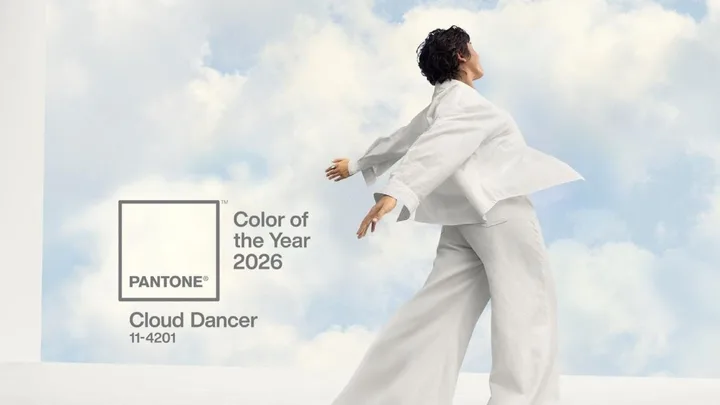
Which is why the announcement of Cloud Dancer, or 11-4201, a delicate, almost spectral white, as the 2026 choice has left many feeling perplexed.
White, after all, is the quintessential neutral—a colour traditionally linked with purity, clarity, and simplicity. Yet, Laurie Pressman, Vice President of the Pantone Colour Institute, contends that the choice symbolises “a calming influence in a frenetic society rediscovering the value of measured consideration and quiet reflection.”

Leatrice Eiseman, Executive Director of Pantone, echoes this sentiment, describing the hue as a “billowy, balanced white imbued with a feeling of serenity.”
She positions it as a minimalist antidote to the sensory overload of modern life, offering not just a colour, but a reprieve.
In colour theory, it’s a soft unassuming presence — a space for stillness to step away from the noise and reflect.
However, we’re not just dealing with theory and herein lies the controversy of Cloud Dancer’s selection. White, after all, is not a neutral entity; it carries a historical and political weight. As such, some are arguing that the choice feels out of touch, calling it “dystopian” and “pretentious.”
It has long been a symbol of wealth, privilege, and exclusion, and in today’s climate of heightened racial tensions and anti-immigration rhetoric, choosing white can be easily perceived as insensitive or even tone-deaf.
In 2024, Pantone selected Peach Fuzz as its Colour of the Year, followed by Mocha Mousse in 2025, both hues reflecting natural skin tones.
Responding to critics who questioned the racial undertones of these choices, Laurie Pressman explained, “Skin tones did not factor into this at all. With Peach Fuzz and Mocha Mousse, people were asking if this was about skin tones. And I think we were going, ‘Wow, really?’ Because, for us, it’s really about, at such a basic level, what are people looking for that colour can hope to answer?”
Yet, as The New York Times fashion critic Vanessa Friedman points out, “Given the recent political discourse, when I hear ‘white,’ less salubrious associations leap to my mind.”
Fashion analyst and trend forecaster Mandy Lee echoed similar sentiments in a video, calling the choice “tone-deaf.” She argued that Pantone’s decision is “inaccurate” for failing to consider the broader cultural, political, and economic context. “How is it not a factor?” she asked, pointing to the rise of white nationalism and its increasing prominence on the global stage.
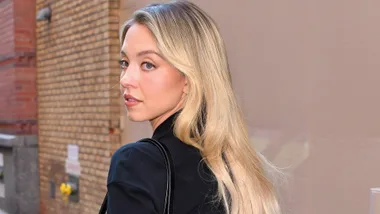
Some have also compared the selection to Sydney Sweeney’s infamous American Eagle ad, where the wordplay on “jeans” and “genes” led to accusations of promoting eugenics. “Did Sydney Sweeney have a say in this,” one commenter remarked on Pantone’s announcement post, while another wrote, “is this rage bait?”
Despite the criticism, Pantone remains firm in its explanation. The selection of Cloud Dancer is meant to offer a symbol of peace and reflection, a colour that provides a sense of calm in an age of hyperactivity.
But in the current political climate, where race, identity, and nationalism are such charged issues, can a colour so intertwined with historical and social significance truly offer the reprieve Pantone envisions?