

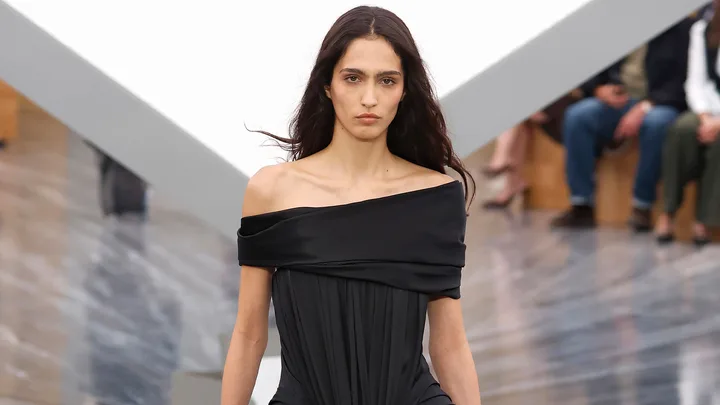
There are certain histories in fashion that feel untouchable, and Dior is one of them. To step into its archive is to encounter silhouettes that rewrote the rules of dress; codes so deeply etched into our collective imagination, they feel immortal. And yet, in Paris this week, Jonathan Anderson dared to begin a new dialogue within that canon.
No other debut this season carried its weight. Anderson’s appointment alone marked history as the first designer since Monsieur Dior himself to hold creative authority across menswear, womenswear, and haute couture. Outside the walls of the show’s venue in Jardin des Tuileries, and at watch parties across the city, the anticipation felt palpable. Inside, the front row could have doubled as the guest list to the party of the year: Jennifer Lawrence, Anya Taylor-Joy, Rosalía, Greta Lee, Mikey Madison, Jonathan Bailey, alongside Anderson’s own peers, designers Glenn Martens, Rick Owens and Alessandro Michele.
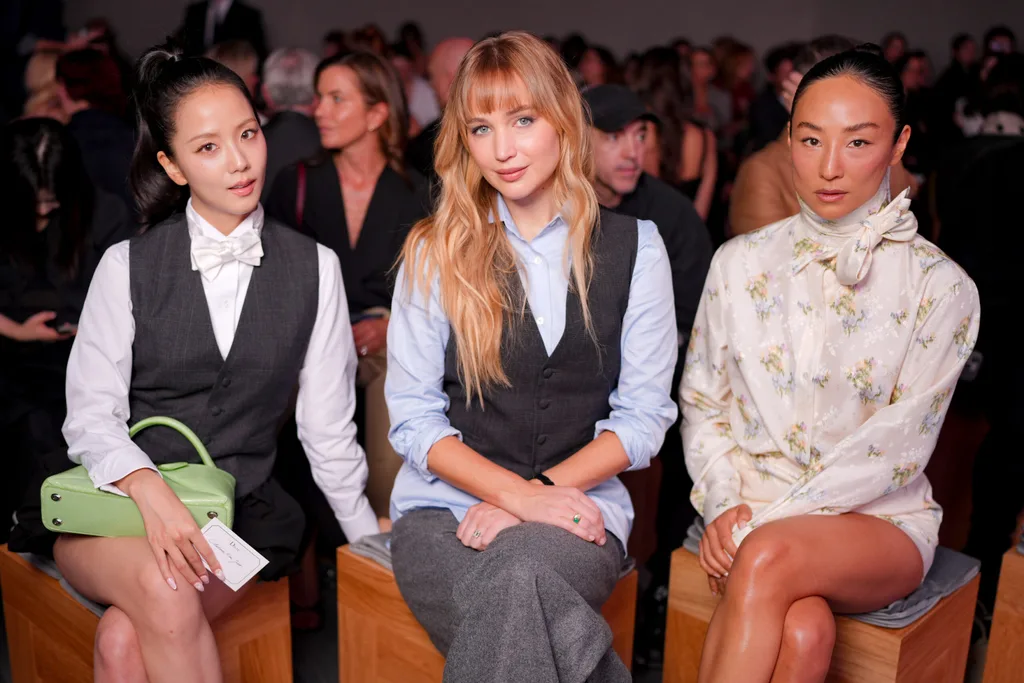
His womenswear debut unfolded as a conversation that didn’t ignore or resist Dior’s past, but rather, invited it in. The symbolism began before a single look appeared. Inside the venue, an inverted pyramid created by Luca Guadagnino and Stefano Baisi sat centre stage. Onto its mirrored planes flashed a montage of Dior’s lineage: the sculptural New Look of 1947, Marc Bohan’s restraint, Galliano’s theatrics, Maria Grazia Chiuri’s feminism. A cinematic invocation of the house’s vast lexicon, projected as a prelude to the inauguration of a new era. As the lights came into focus and the models stepped onto the runway, a voiceover of Lord Byron’s ‘She Walks in Beauty’ played over Tom of England’s ‘Song of the Sex Monk’, steeping the room in romance and reverie.
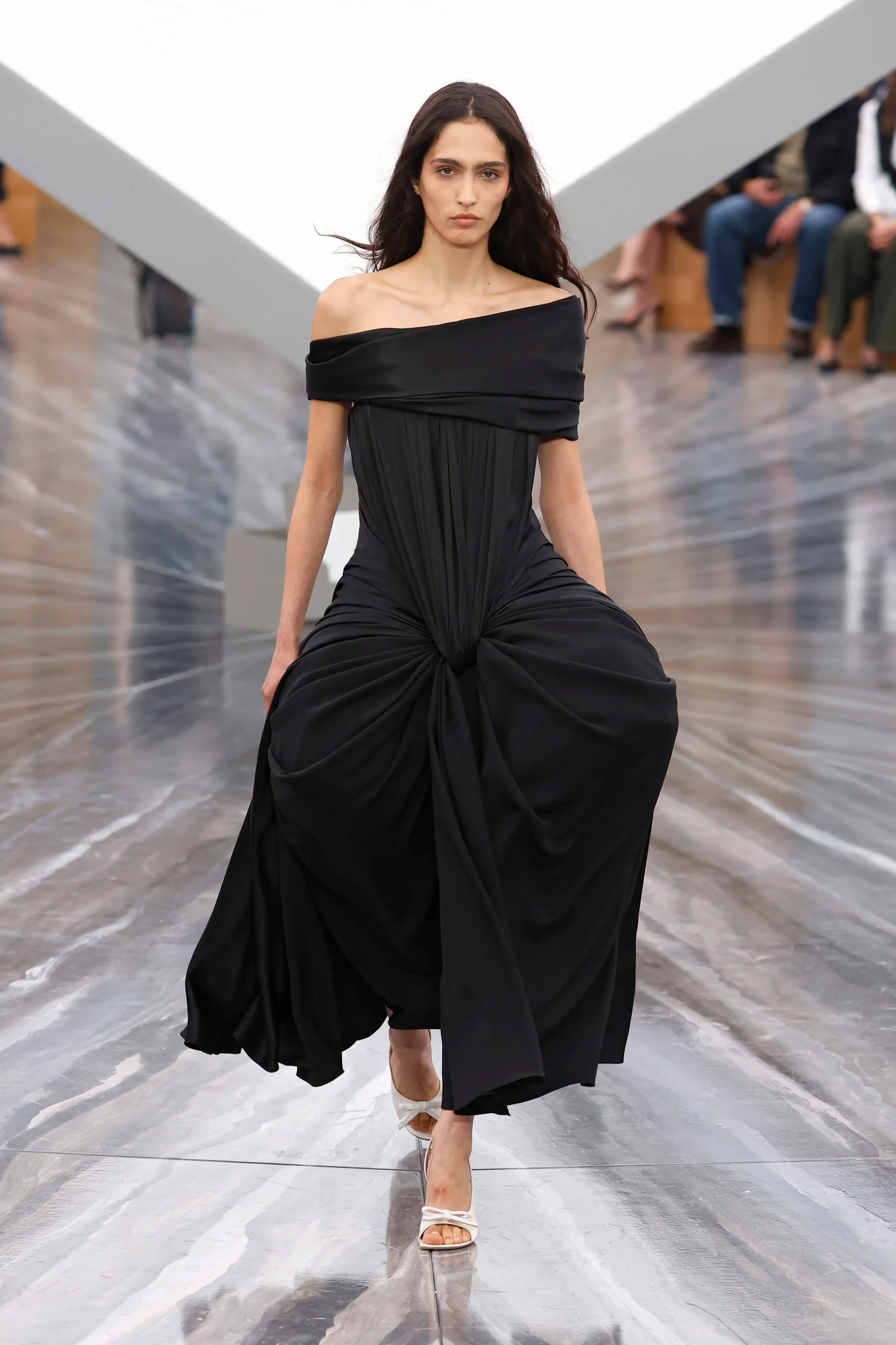
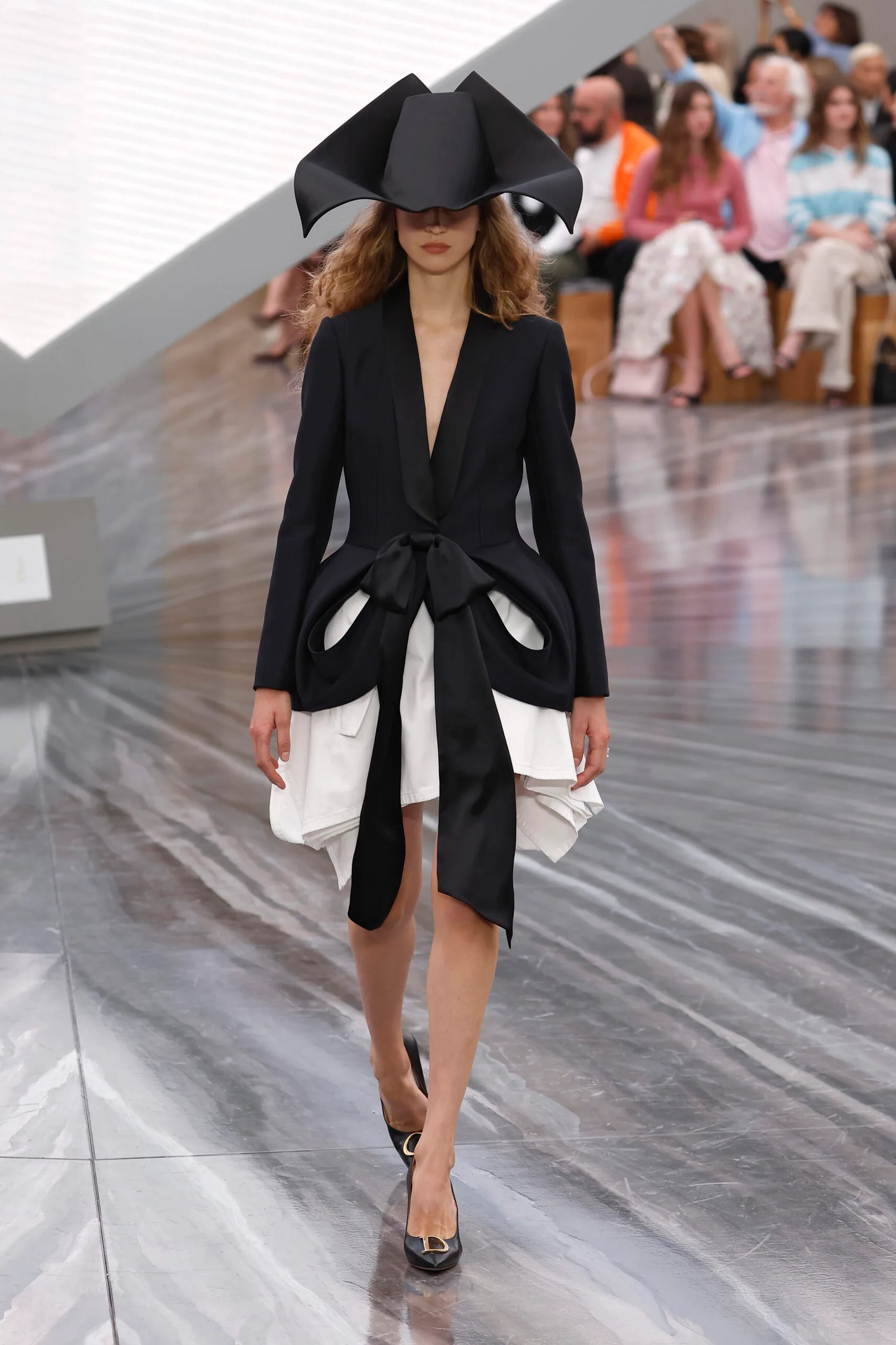
The first look said as much. A white strapless dress, suspended away from the body in a swoop of fabric which called back to Dior’s founding codes while glancing at Anderson’s own work at Loewe. From there, the dialogue expanded. Bows — the eternal emblem of Miss Dior — were made oversized and unruly, tied across tuxedo shirts or perched on denim minis. Slim cigarette trousers reappeared, but softened into languid suiting. Skirts rippled with ruching and bubble hems, their petal-like forms blooming into volume before being anchored back down with sharp shirting and boxy coats.
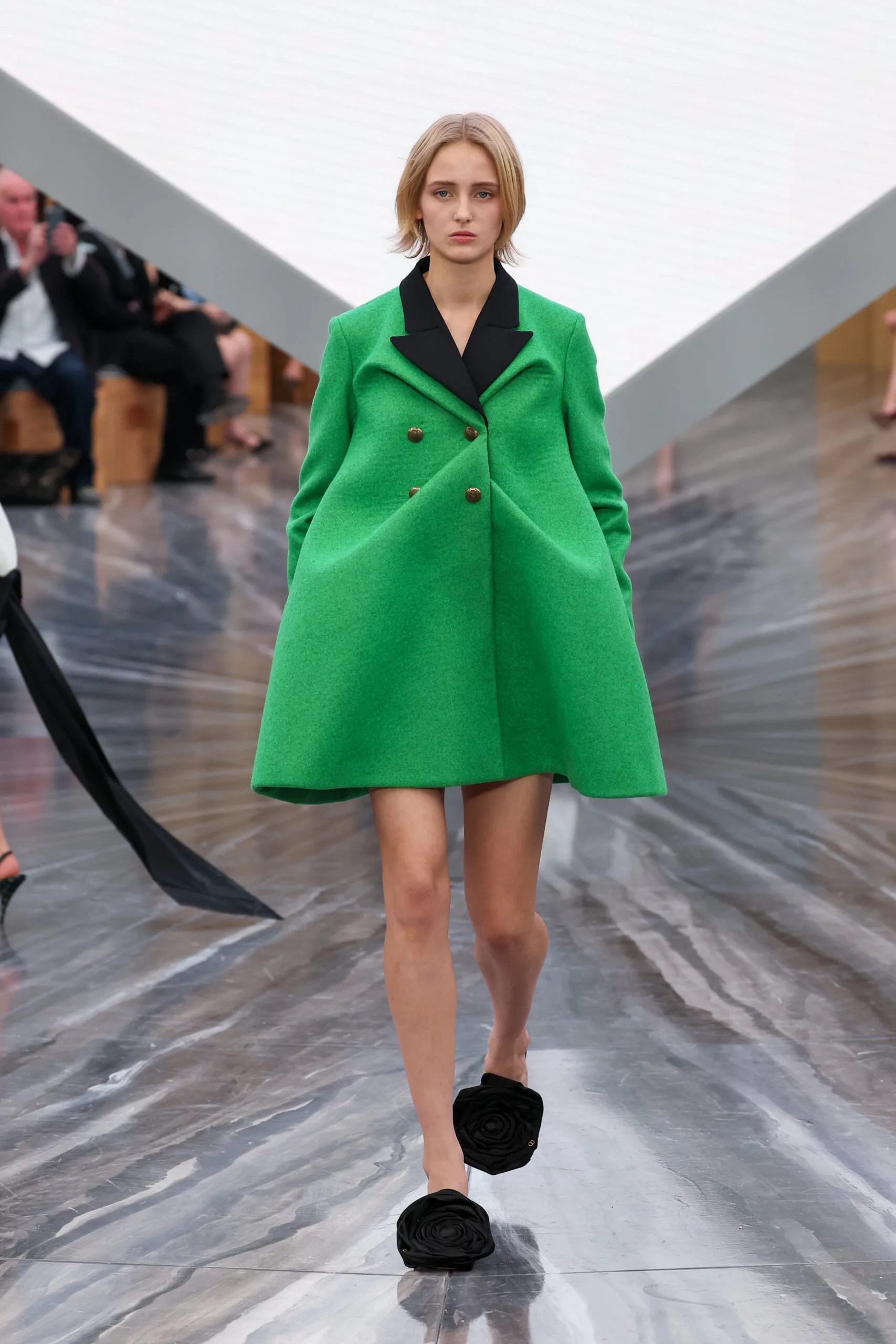
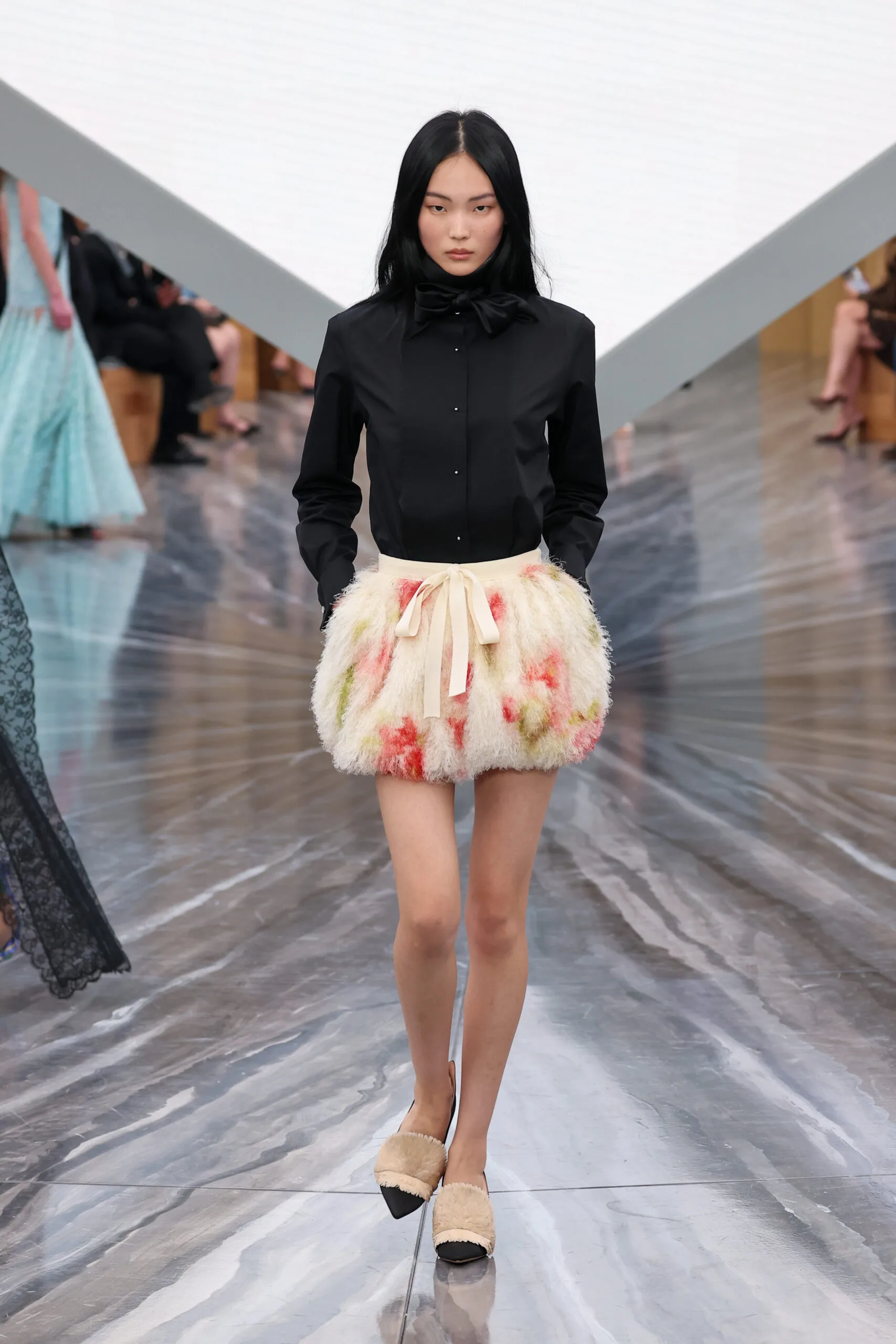
Everywhere, tension animated the clothes: between prim and punk, couture and street. Plaid tailoring edged toward rebellion, while satin tricorn hats evoked both buccaneer romance and a sense of theatre, much like Galliano’s illustrious years. Waistcoats and capes played at historical costume yet were cut with a modern looseness. Even the Bar jacket, Dior’s holy garment, was pushed into new shapes: elongated, bulked out, or splayed open in back, as if to prove that reverence can coexist with reinvention.
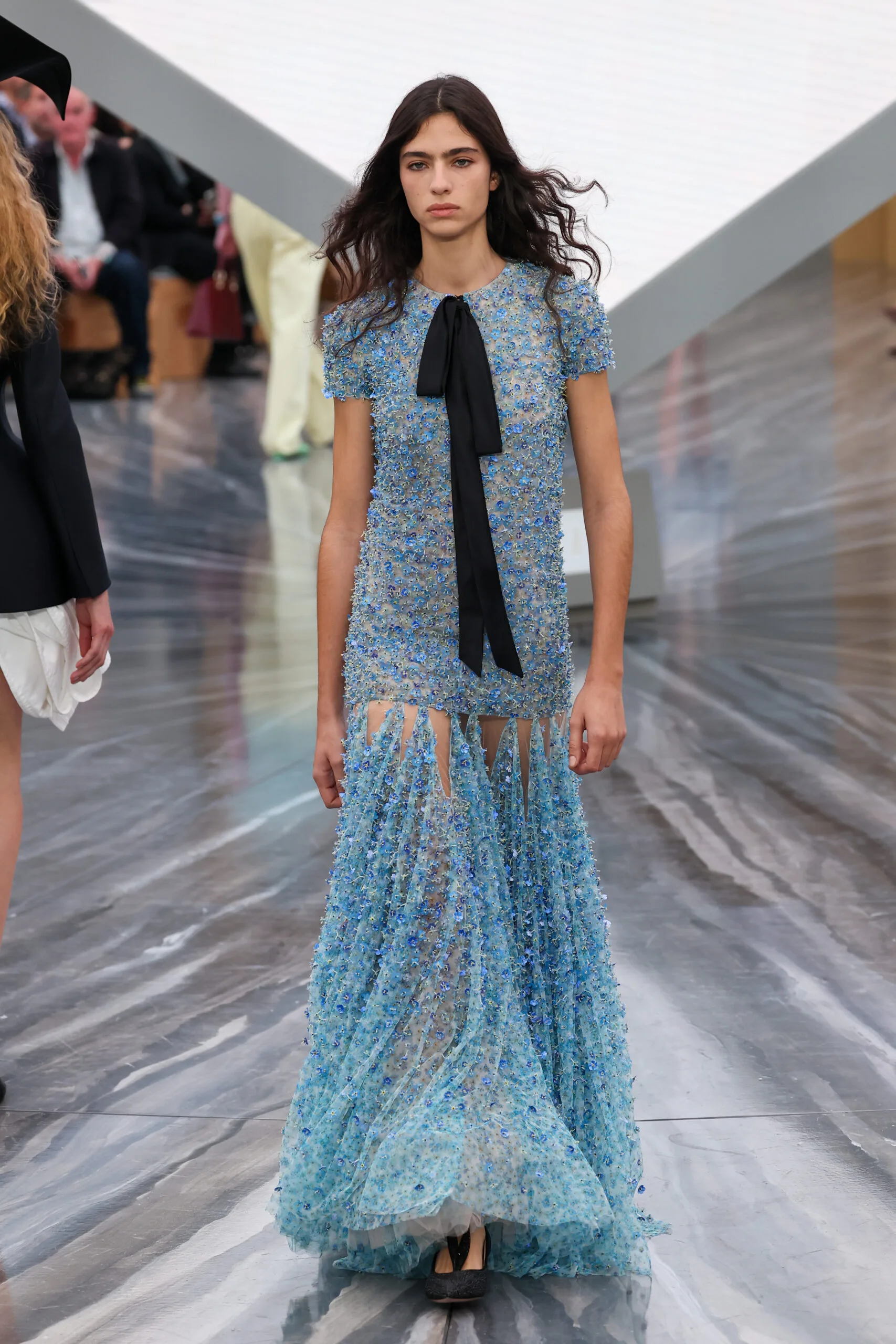
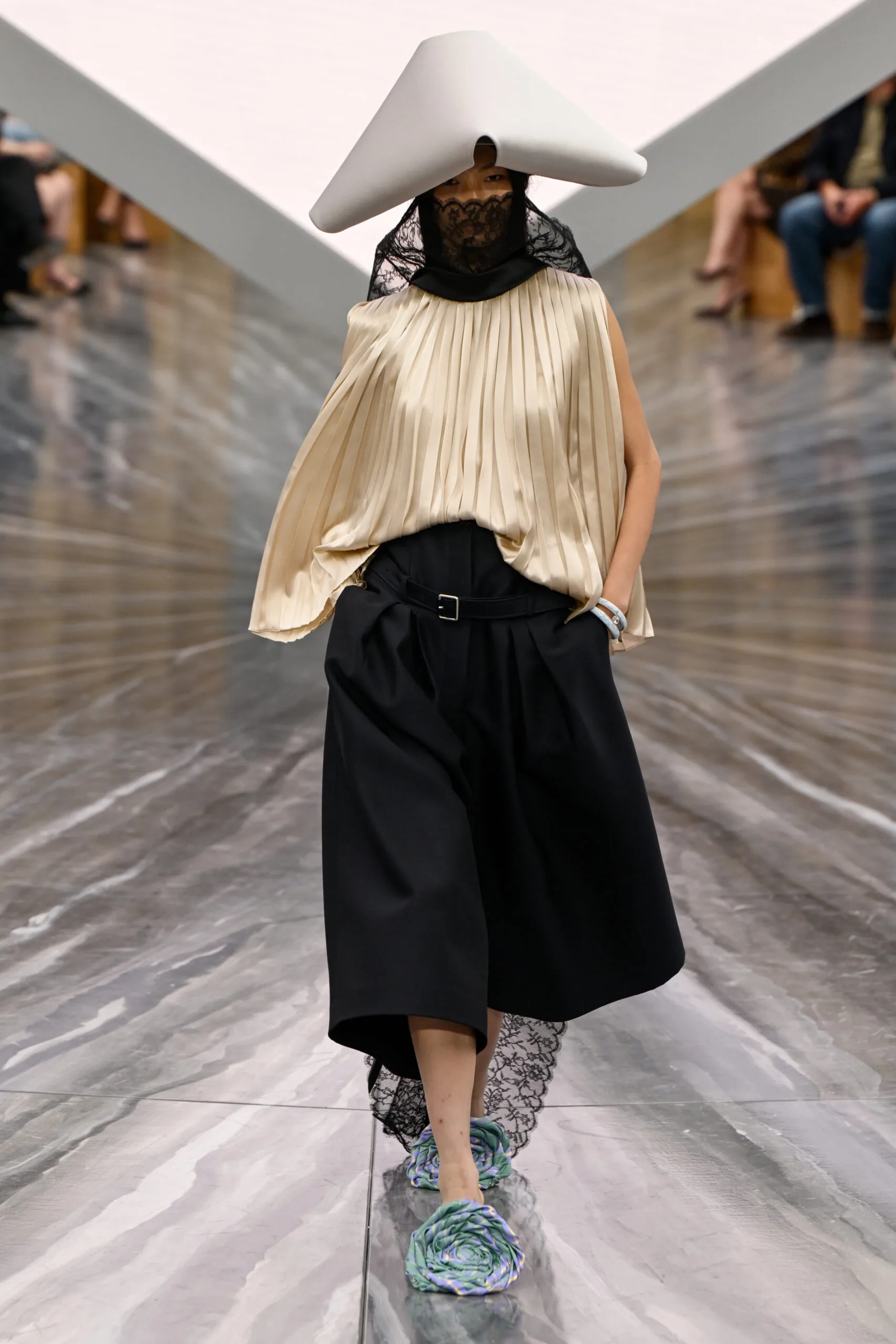
The collection’s palette reinforced this duality. Sky blue, dove grey, and palest cream felt almost ghostly in their delicacy, while denim, khaki, and plaid grounded the story in something grittier. Accessories sharpened the contrasts: slingback bows, heels with exploding rose, triangular handbags knotted like origami. And hats — so many hats — tilted the line between couture relic and surrealist gesture.
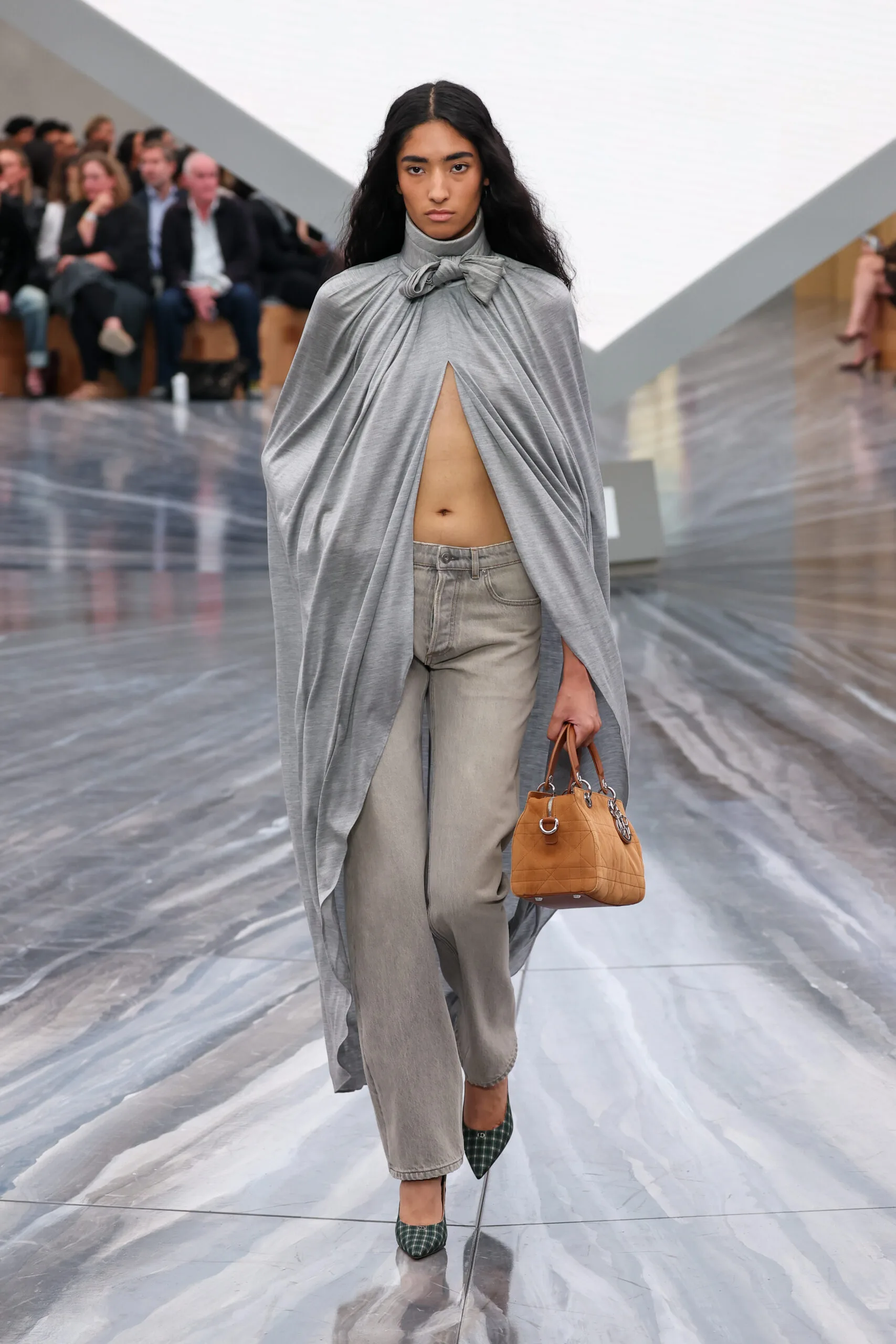
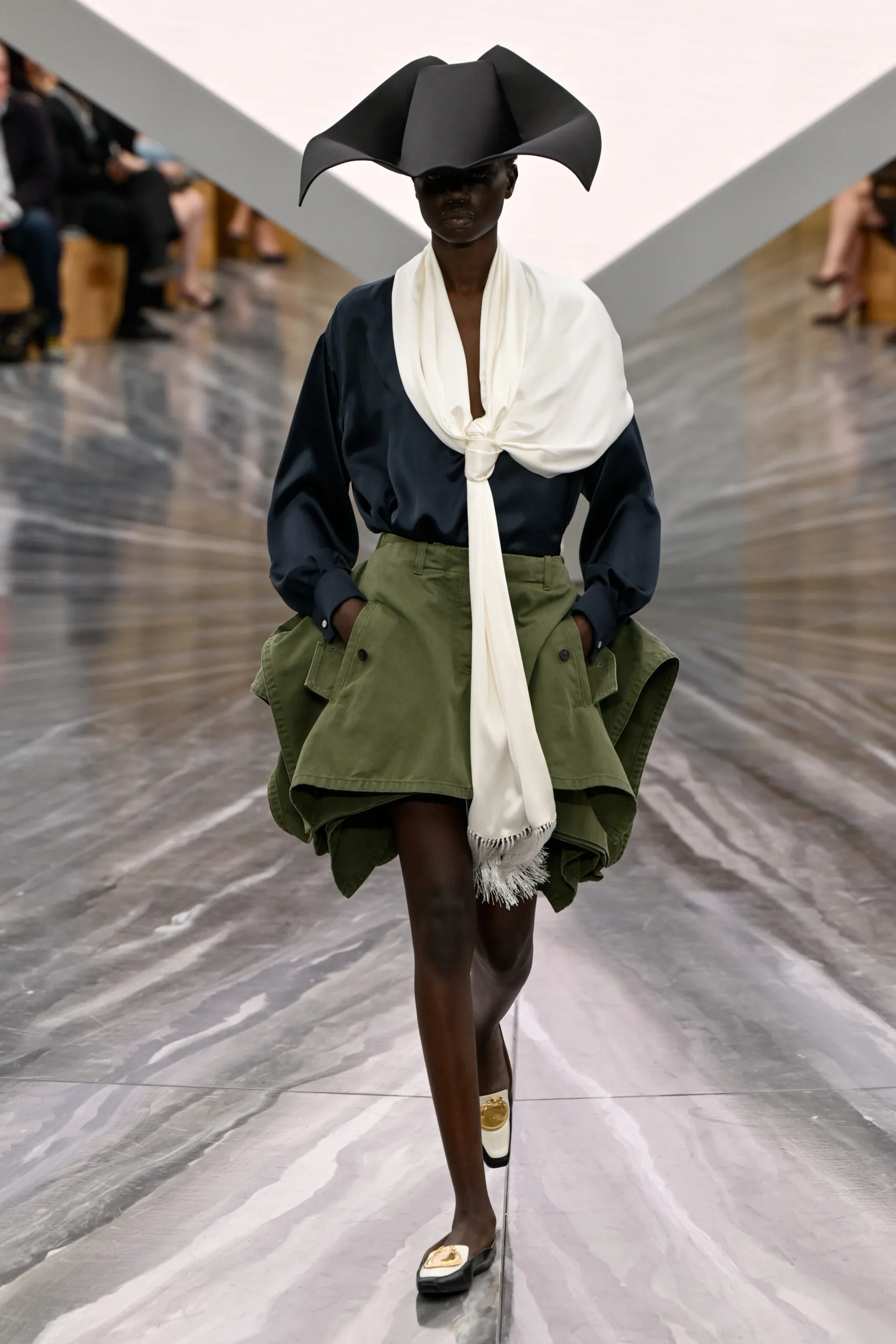
What emerged was not a tidy thesis but a living conversation. Anderson didn’t smooth Dior’s history into a single narrative; he let it speak in fragments, allowing silhouettes from different decades to jostle against one another, then re-stitching them into something distinctly his. That push and pull — the willingness to let tension breathe — is perhaps the clearest marker of his authorship.
It’s a curious thing, witnessing the weight of history and the thrill of something new at once. And in the quiet after the show, it lingers: the sense that even the most monumental traditions can be approached with fresh eyes. A reminder that beginnings are always hidden within endings.
This article was originally published on ELLE Australia and was re-shared here with permission.

