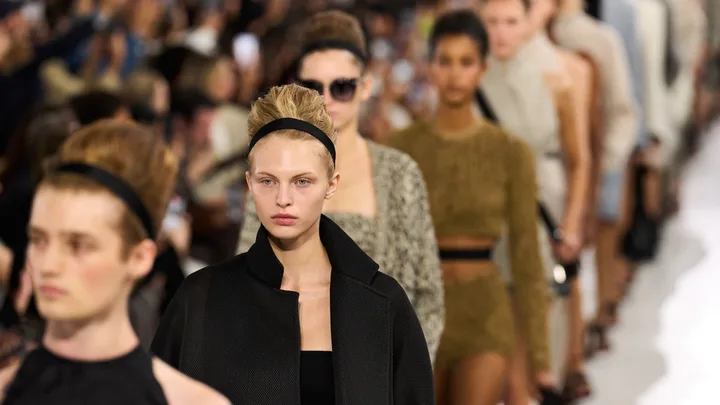
After the itinerant glamour of New York and London, fashion month now unfurls in Milan — a city where luxury is less spectacle than ritual. From September 24 to 30, Spring/Summer 2026 has emerged as a quiet meditation on form, fabric, and the enduring Italian instinct for elegance.
This season will be remembered as one of Milan’s most transformative in recent history, a week dense with debuts. But the stage does not belong solely to the marquee names. A new guard of designers is using Milan’s platform to stake their claims, experimenting with form and storytelling to challenge what “Italian fashion” can mean today.
Below, we’ve rounded up the biggest shows and moments from Milan S/S’26.
Max Mara
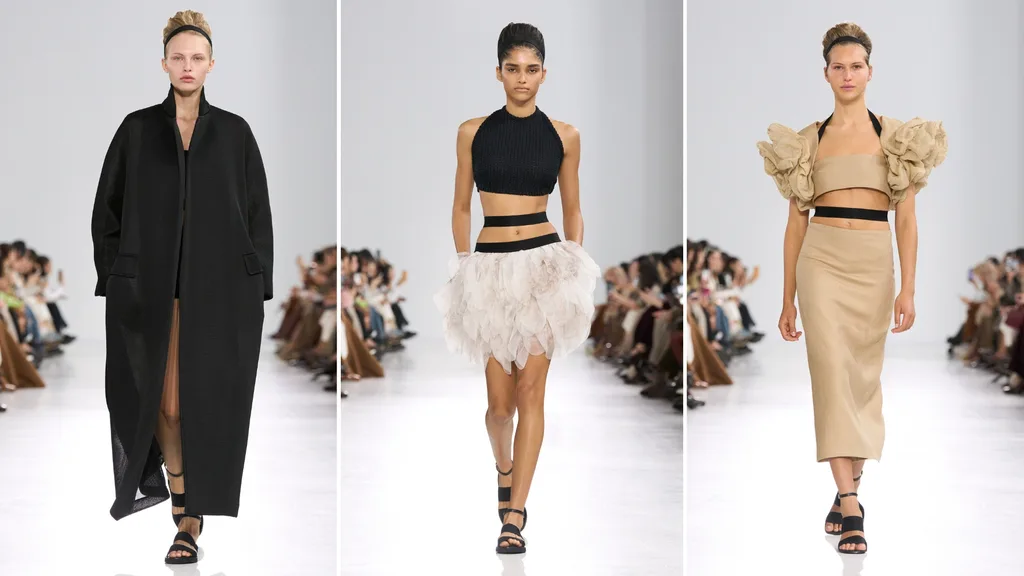
Max Mara’s SS26 collection is a study in contrasts: sharp tailoring meets Rococo romance. Trench coats bloom with gilded shoulder frills, organza skirts flutter like petals, and gauzy crests sweep across hips like aquatic plumes.
Soft pastels, strict pencil skirts and black harness belts ground the whimsy, creating power through playfulness. Madame de Pompadour inspires — elegance, wit, and unapologetic individuality anchoring a collection as cerebral as it is sensual.
Fendi
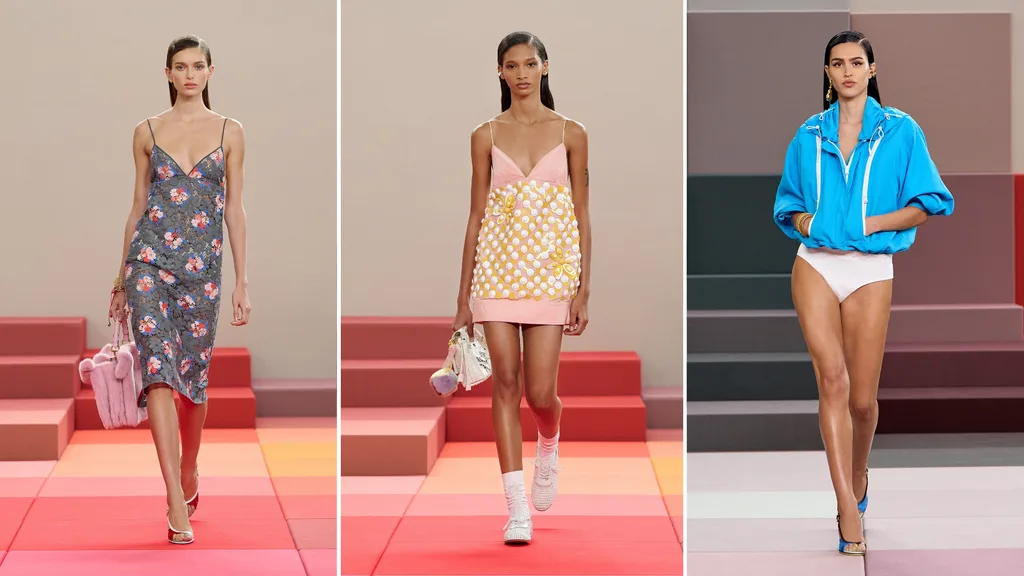
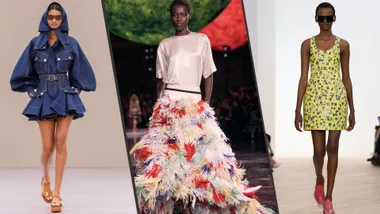
Fendi’s SS26 collection is a kaleidoscopic ode to ease and sensuality. Silvia Venturini Fendi blends featherlight tailoring with saturated colour, from bubblegum pink to vermillion, for pieces that blur the line between everyday wear and couture-level craft.
Organza skirts, pixelated prints, and deconstructed jackets play with negative space, while candy-hued accessories and sling-back sandals bring a wink of joy. This is summer refracted: romantic, irreverent, and distinctly, playfully Fendi.
Boss
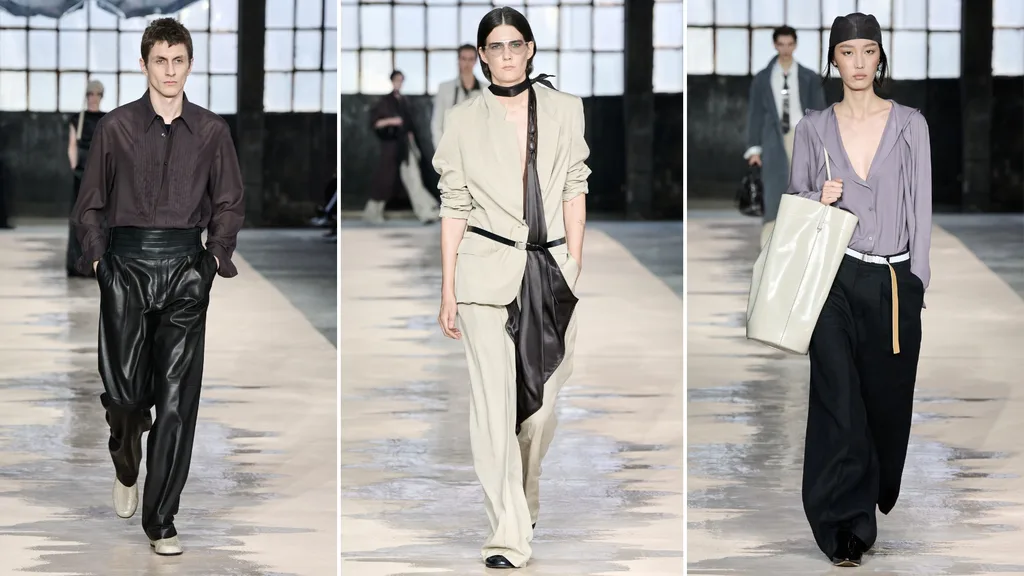
BOSS SS26 explores duality with The BOSS Paradox, a collection balancing order and chaos. Precision tailoring meets fluid silhouettes, matte fabrics clash with shine, and trenches are reimagined with pleats that float.
Womenswear is anchored by low-slung trousers, pocketed dresses and inverted knits, while menswear lightens corporate suiting with airy proportions and rebellious layering. Accessories include the new Revers bag, pointed flats, sleek loafers and near-barefoot sneakers, creating a wardrobe for the bold, confident, self-defined BOSS.
Emporio Armani
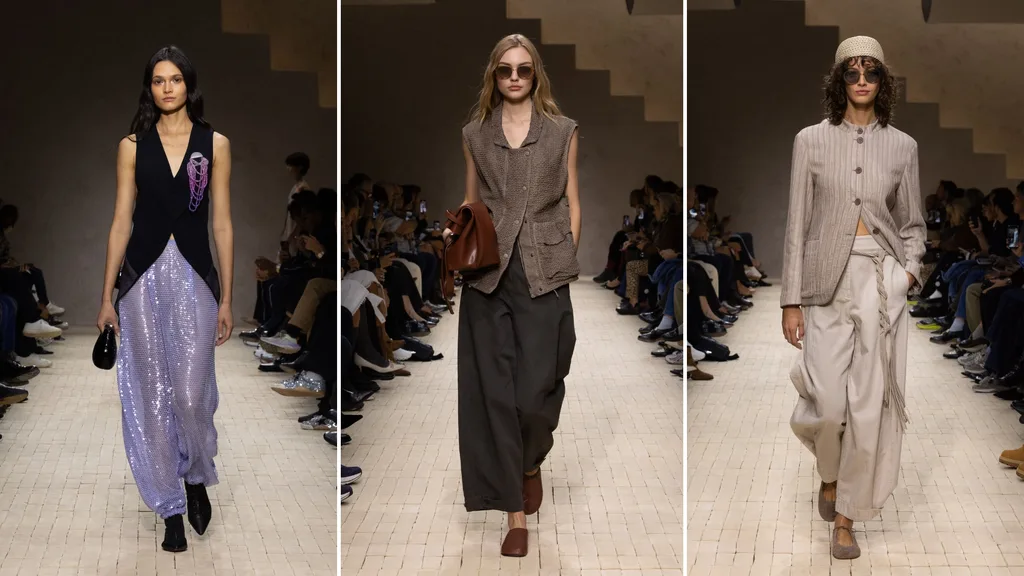
Emporio Armani’s SS26 collection captures the fleeting sensation of returning to the city after travel, where memories mingle with reality and everyday life feels lighter. Fluid silhouettes, soft tailoring and neutral tones channel the house’s signature elegance.
Ikat fabrics, kimono ties, obi belts and raffia caps bring a nomadic edge, softened into a city wardrobe of dusters, jumpsuits and abbreviated skirts. Evening-wear arrives in ethereal nylon, proving dressing can be both spontaneous and precise.
Moschino
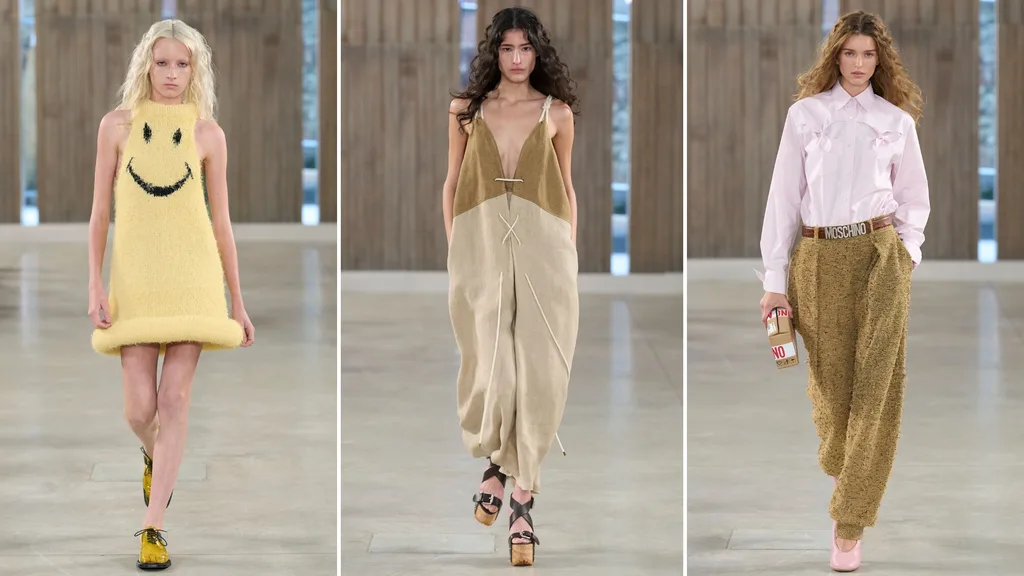
Adrian Appiolaza used Moschino SS26 to deliver a playful but pointed message: reuse, recycle, reimagine. Dresses were made from burlap potato sacks, patchworked tees and vintage pieces, with rope and raffia replacing embroidery.
Gag bags included a sand bucket and saucepan clutch, nodding to Moschino’s cheeky legacy. It was a rare step into social commentary for Appiolaza, signalling a planet-conscious Moschino while hinting at the sharper tailoring still to come.
Prada
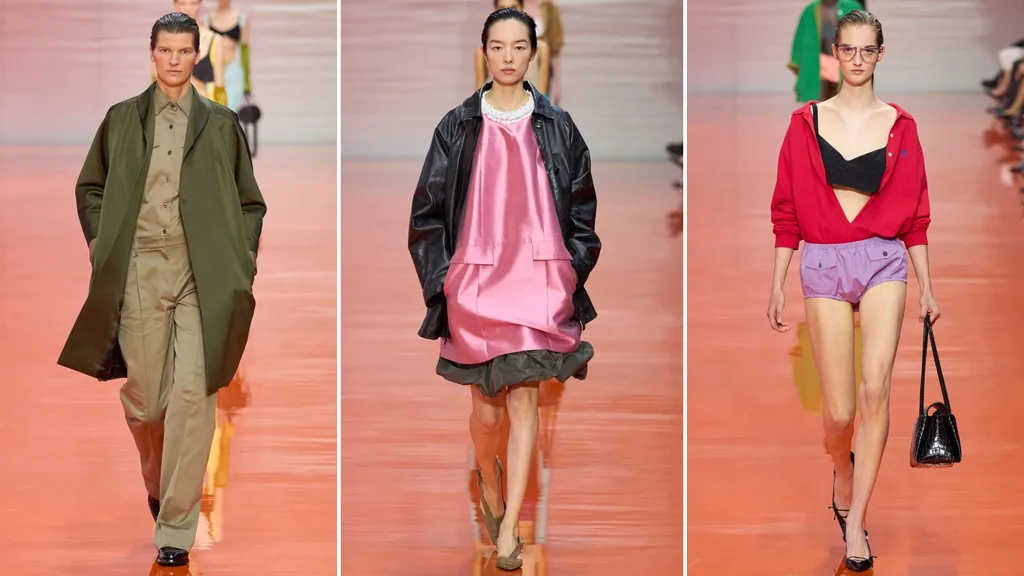
Prada SS26 was a response to cultural overload, with Miuccia Prada and Raf Simons finding freedom in uniformity. Military shirts and officer trousers were disrupted by crystal earrings, satin opera gloves and glossy ladylike bags.
Silhouettes floated away from the body — bras offered coverage but no support, suspender skirts exposed midriffs, and patchworked bubble skirts stole the show. In a stripped-back Fondazione set, Prada proved once again that disruption and elegance can coexist — and redefine modern dressing.
KNWLS
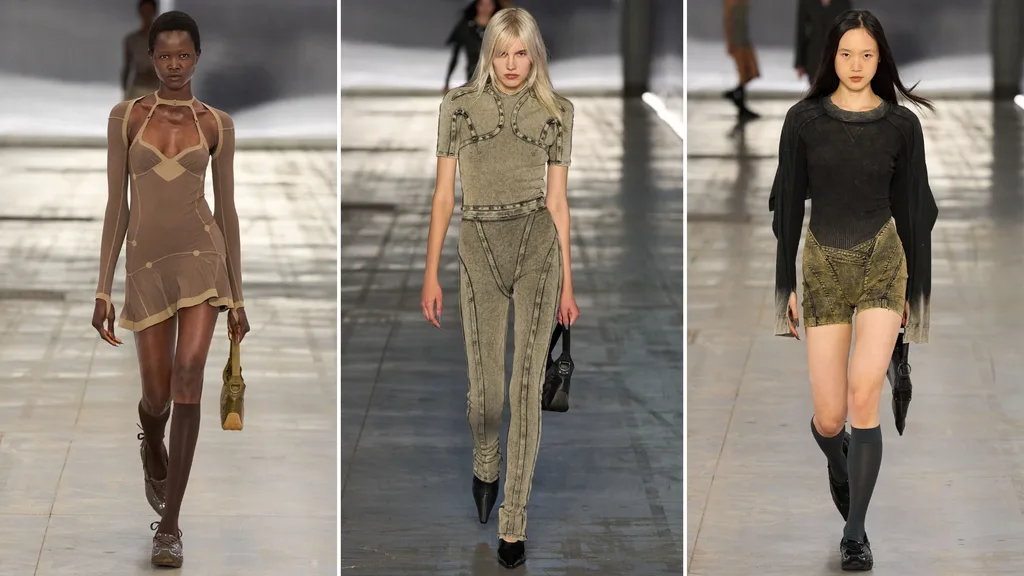
KNWLS made its Milan debut with a Nike collaboration that redefined athleisure with edge and sensuality — and no yoga pants in sight. The show fused KNWLS’ indie London grit with Nike’s technical mastery, delivering futuristic sneakers inspired by archival boots, a transgressive waffle-sole handbag and even a Flyknit corset.
Leather-bonded jackets, bodycon layers and cotton knits radiated warrior energy. As VTSS DJ’d from above, the message was clear: this was athleisure built for running straight to the club.
Jil Sander
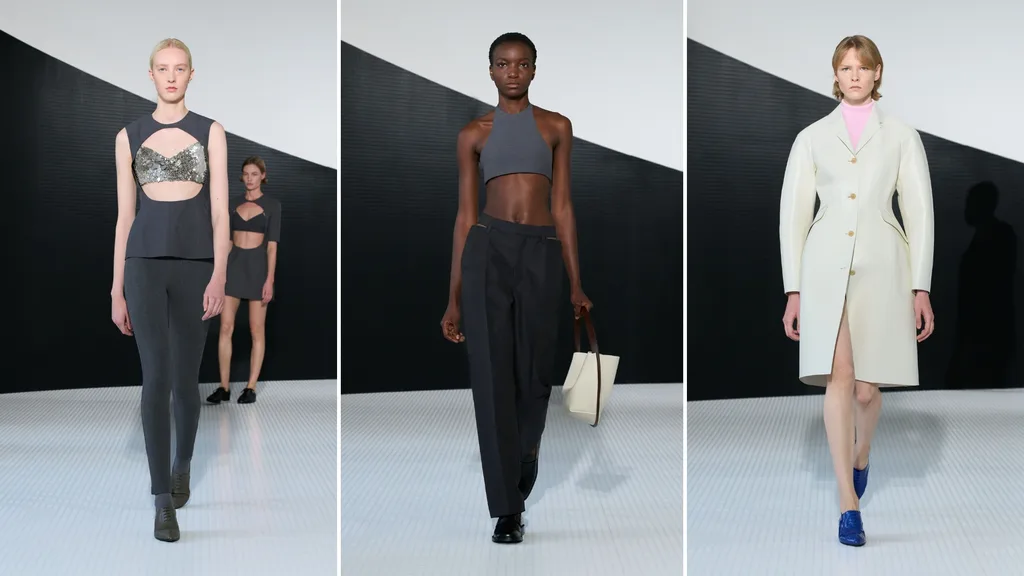
Simone Bellotti’s debut at Jil Sander marked a return to the house’s Piazza Castello HQ after eight years, bringing quiet excitement back to the brand. He reworked iconic double-face coats in ultra-fine leather, cut jackets with high vents to flash skin, and layered gossamer knits for subtle sensuality.
Skirts featured geometric darting and Fontana-esque slashes, while chainmail-like bras peeked beneath porthole dresses. The result balanced structure and lightness, reaffirming Jil Sander’s minimalist codes for a new generation.
Tod’s
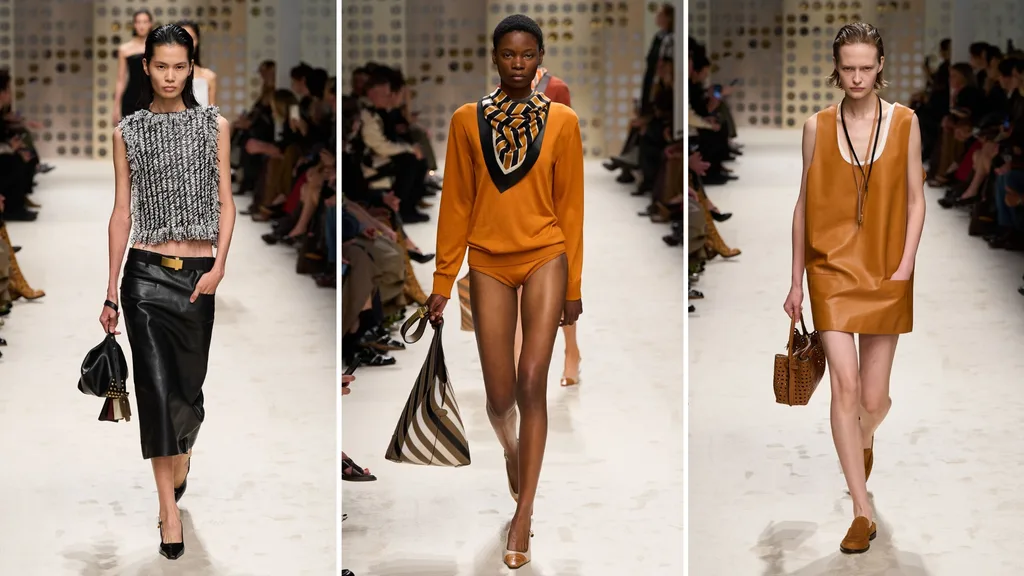
At Tod’s this season, Matteo Tamburini made the case for quiet mastery over fleeting trends. Spring/Summer 2026 saw leather take center stage, cut into square skirts, handkerchief tops, and raw-stitched cabans that felt at once precise and relaxed. Trenches were worn inside out, seams shown off as deliberate punctuation, while stripes in sun-washed hues brought a late-summer lightness. The result was a collection that spoke softly but confidently, proving that refinement — when done with wit — still turns heads.
Versace
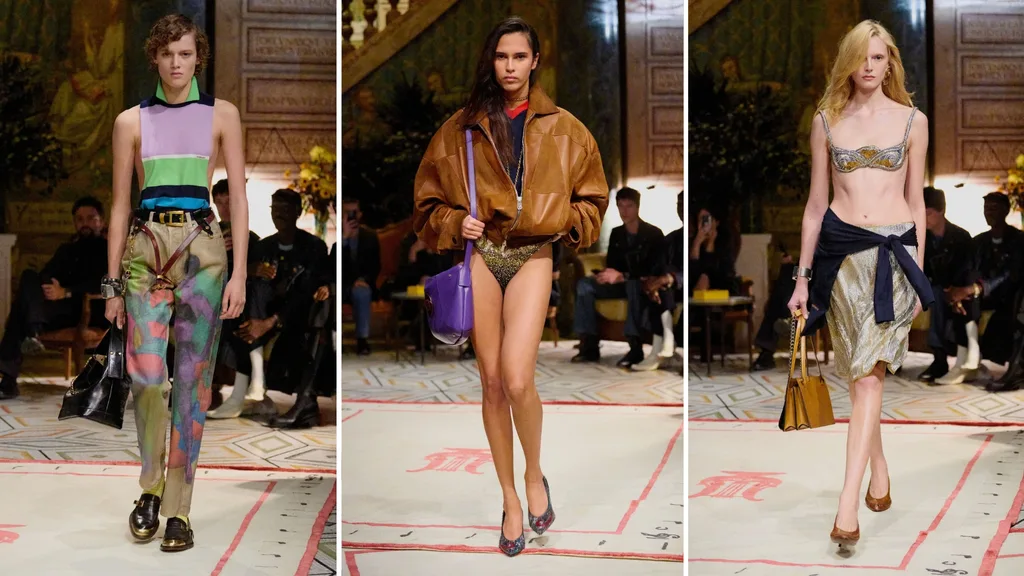
For his debut at Versace, Dario Vitale faced a formidable brief: stepping in as the house’s first non-Versace creative director just as the brand is sold to Prada. Rather than yield to the pressure, he grounded Versace’s mythology, reimagining it for modern life. Out went opera-length gowns. In came slashed jersey dresses, embroidered leather vests and chain-mail bra tops.
Vivid colour pairings and layered prints lent the collection a louche, contemporary sensuality that felt intimate rather than iconic.
Bottega Veneta
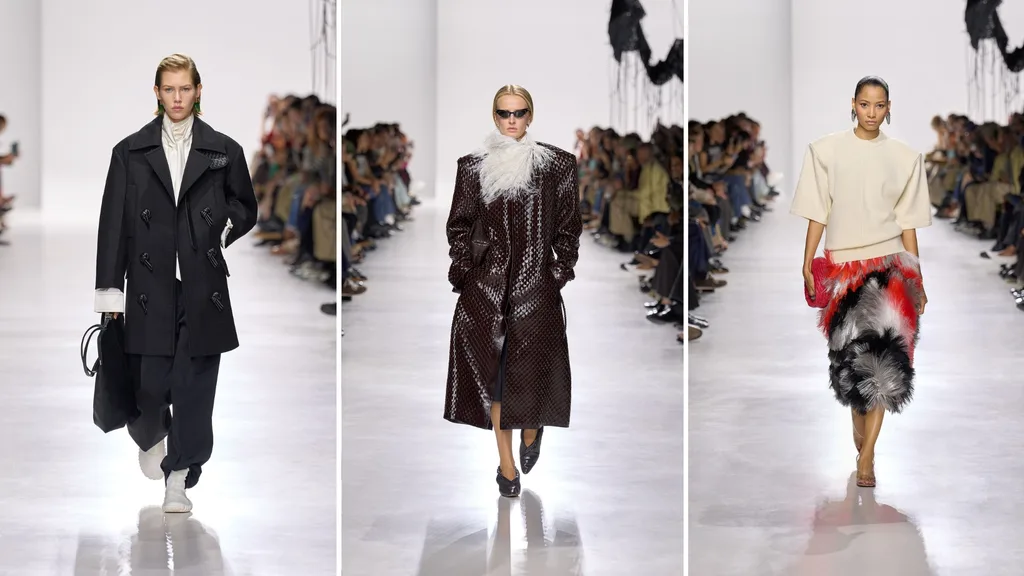
Louise Trotter made a confident debut at Bottega Veneta, reminding the industry why she was worth the wait. Known for her precision at Lacoste and Carven, Trotter leaned into the house’s artisanal DNA: intrecciato coats that mimicked snakeskin, floor-sweeping capes, and feather-trimmed robe coats that floated down the runway.
The show balanced structure and sensuality, with recycled fiberglass knits shimmering under the lights and parachute silk dresses skimming the body. A poised, quietly powerful start.
Giorgio Armani
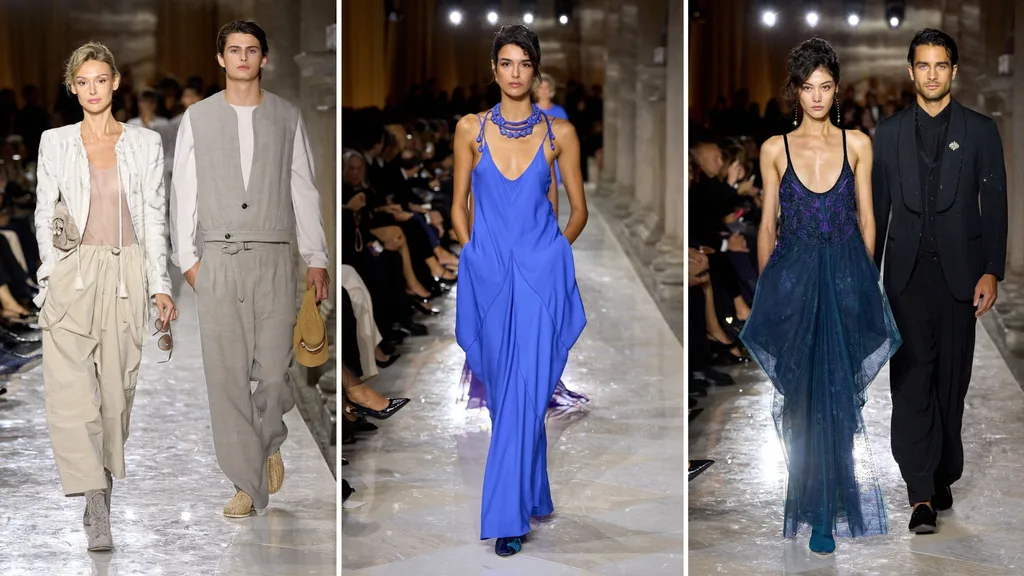
Giorgio Armani’s final collection was a love letter to his own legacy. Staged at Milan’s Pinacoteca di Brera, the show felt both celebratory and bittersweet following his passing earlier this month at 91.
Silhouettes traced back to his very first 1975 show: fluid tailoring, softened masculinity, and that iconic greige palette. Models who’ve long defined Armani’s world returned, some visibly moved. His successors, Silvana Armani and Leo dell’Orco, took a bow to heartfelt applause, closing a chapter but securing his eternal style.

Related stories
Native ad body.
Native ad body.
Native ad body.