The hair growth category is surging, as hair loss evolves from a taboo topic into a booming business. In Australia, the hair restoration market is projected to reach $400 million by 2030, growing around 10 per cent a year. Once dismissed as a concern solely for men or post-partum women, thinning hair is now being recognised among younger generations.
“Up to 90 per cent of men and nearly 50 per cent of women will experience some form of hair loss in their lifetime,” says Dr Michele Squire, scientist and founder of Qr8 Mediskin, adding that the emotional impact can’t be underestimated. “In one study, 40 per cent of women reported marital problems and career difficulties they attributed to hair loss.”
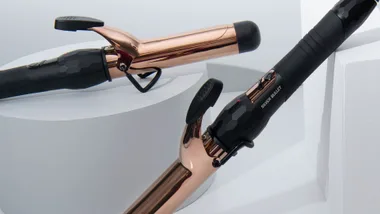
Christopher Chu, Aveda’s head of education, says, “Frequent heat styling, tight hairstyles and chemical processing can weaken hair.” Pollution, hormones and even weight loss can also play a role.
All that considered, it’s safe to say that the hair-growth industry will continue to, well, grow. Here’s what’s new and what’s next.
Scalp In Focus
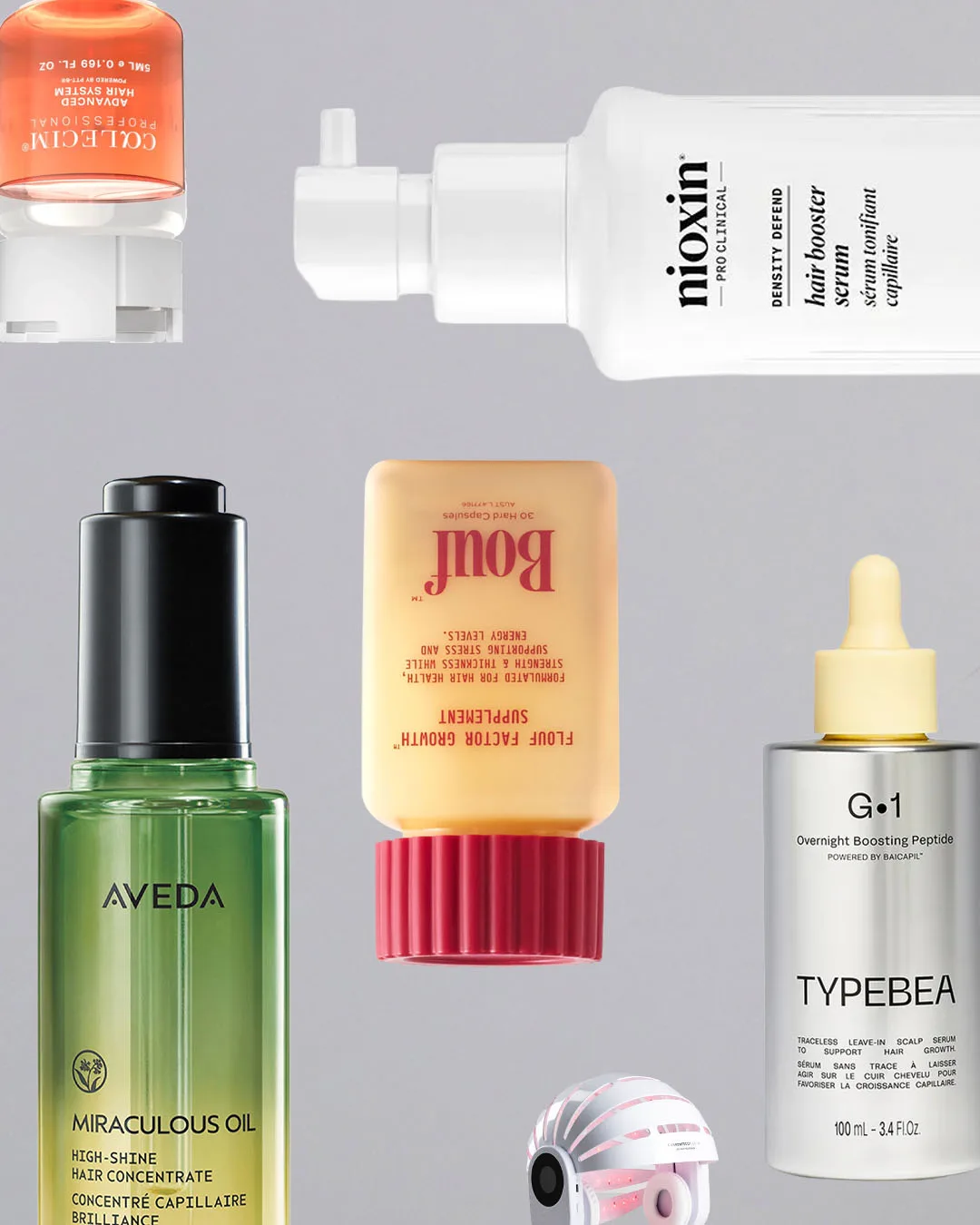
“Think of the scalp as the soil from which your hair grows,” says Chu. “Supporting the scalp’s health with revitalising treatments helps create optimal conditions for healthy hair growth.” Brands like Aveda, Nioxin and Typebea are using biotech-powered complexes and actives to fortify and aid hair strength.
Try: Aveda Miraculous Oil High Shine Hair Concentrate, $64. Nioxin Hair Booster Serum, $121, at adorebeauty.com.au. Typebea G1 Overnight Boosting Peptide Hair Serum, $80.
“More than 50 per cent of hair can be lost before thinning becomes visible”
Daily Dose
Supplements aimed at supporting strand strength are increasingly popular, helping to tackle deficiencies linked to excessive shedding. While not a quick fix, they can work to address underlying issues such as low iron, zinc or vitamin D – all linked to poor hair quality and increased breakage. Many formulas include collagen to support growth from the inside out. “Nutritional deficits are a major contributor, particularly for women,” says Squire. However, she adds, “prevention lies in early identification and consistent, evidence-based treatment”.
Try: Bouf Flouf Factor Growth Supplement, $39.95. Always read the label and follow the directions for use.
Let’s Get Clinical
For those wanting professional support, in-clinic options are evolving rapidly. Microneedling and platelet-rich plasma treatments can help stimulate dormant follicles, while prescription platforms like Qr8 Mediskin offer personalised formulas supported by doctors. “It’s a luxury- medical hybrid,” Squire explains of Qr8. “Precision care, plus safety and convenience.” She also emphasises the importance of early intervention. “More than 50 per cent of hair mass can be lost before thinning becomes visible, so seeking help as soon as possible is essential.”
Try: Qr8 Mediskin hair regrowth; qr8mediskin.com.
Turn On The Lights
As Chu notes, hair health is now viewed as an extension of self-care, as technology offers more options. Light therapy has moved from the clinic to at-home devices for skin and, more recently, hair and scalp, with LED helmets and combs using low-level light therapy to stimulate follicles and improve hair density. But while a high-tech device for daily use is appealing – particularly for the time-poor – results rely on consistent use, so be realistic about your time commitment.
Try: CurrentBody LED Hair Growth Helmet, $1159.
Hormone Shifts
Shedding can ramp up during life stages such as perimenopause and menopause. “A decline in estrogen and progesterone can make hair follicles more sensitive to DHT, a hormone known to shrink and weaken follicles,” says colourist Simon Bright of Sydney’s Jonny & June salon. Bright uses the six-week Calecim Advanced Hair System program, which employs stem cell ingredient PTT-6.
Try: Calecim Professional Advanced Hair System, $550.
Words by Kate Lancaster, Additional reporting by Sally Hunwick

Related stories

Native ad body.

Native ad body.


Here’s How To Achieve Summer’s Hottest Colours At-Home
Native ad body.