

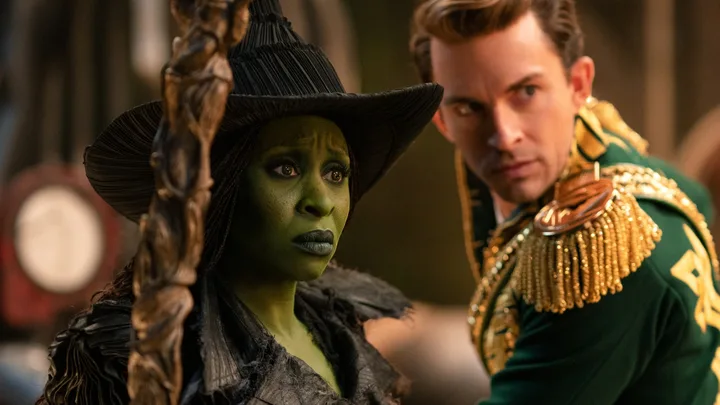
Wicked: For Good has finally arrived in cinemas, sweeping audiences back into the intoxicatingly strange and wonderfully wicked world of Oz.
For years, fans questioned whether Wicked’s brisk and fragmented second act could sustain a full-length sequel, yet director Jon M. Chu delivers it with profound emotional richness. The film is leaner and less ostentatious than its predecessor, but undeniably more affecting.
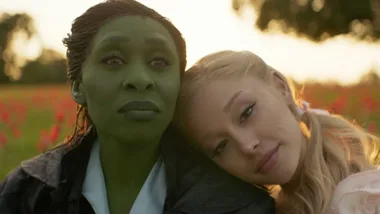
Ariana Grande is a revelation, turning Glinda’s saccharine brightness into a quietly shattering study of complicity and lost innocence. Cynthia Erivo’s Elphaba, already a near-mythic figure, brings a bruised vulnerability that anchors the film’s darker, more contemplative tone.
Still, viewers may have noticed a few curious creative choices. Although Dorothy, portrayed by Bethany Weaver, appears at multiple pivotal moments after her house crashes into Munchkinland, her face is never shown.
Instead, we’re offered only some of the classic motifs: the cyclone-tossed house, Toto trotting at her heels, her encounters with the Tin Man, Cowardly Lion and Scarecrow, and the iconic gingham dress paired with… silver slippers. As she skips toward the Emerald City, the expected ruby-red sparkle is conspicuously absent.
Fortunately, Jon M. Chu has explained several of these decisions. Keep reading for a full breakdown of your Wicked: For Good questions answered.
Why Don’t We See Dorothy’s Face in Wicked: For Good?
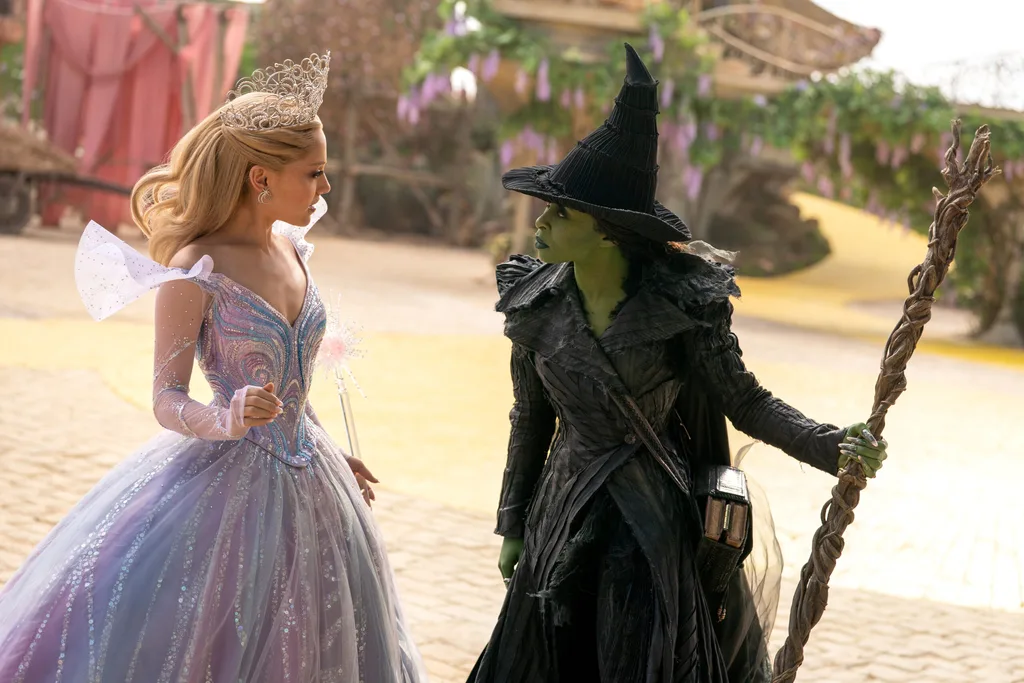
In a November 2024 interview with Variety, Jon M. Chu first hinted at Dorothy’s presence in Wicked: For Good. “In the show, Dorothy is around,” he noted.
“They have to intersect, and you can only tease it so much. I won’t say whether she’s a character, necessarily, in movie two.” He added that he hoped audiences could project their own idea of Dorothy onto the story, teasing that Part Two would determine how much of her we would actually see.
By 2025, Chu clarified that while Dorothy is undeniably significant within Oz’s mythology, the film’s emotional core remains Elphaba and Glinda. “That intersection is the place where we were first introduced into Oz,” he told Vanity Fair.
“We tread lightly, but try to make more sense of how it impacts our girls [Elphaba and Glinda] than maybe the show does. We’re delicate”
Weeks before the sequel’s release, Chu explained to People why he chose not to show Dorothy’s face.
“I didn’t want to step on who you think Dorothy is in whatever story that you came into this with. She’s probably more in this story than in the show and yet not taking over the story — it is still Elphaba and Glinda’s journey, and she is a pawn in the middle of all of it,” he explains.
He also explained to ELLE, “If you saw her face, you’d want to know more about her—and it’s not about Dorothy.”
Cynthia Erivo echoed Chu’s comments, telling Empire, “I think that’s such a wonderful thing to do because then everyone gets to keep the Dorothy that they know.”
Why Are Dorothy’s Slippers Silver, And Not Ruby Red?
When designing Dorothy’s appearance, Wicked costume designer Paul Tazewell faced a delicate task. Rather than the beloved ruby slippers, the Wizard Of Oz heroine wears silver, jewel-encrusted pumps on her journey to the Emerald City — a choice grounded in both narrative intention and copyright necessity.
Speaking to Esquire, Tazewell revealed that his favourite fashion Easter egg appears in the iconic footwear, which ties directly into the film’s tornado sequence. “My favourite is the tornado in the crystal and silver slippers that Nessa Rose wears,” he said. In the Wicked films, those are the shoes Nessa receives in the first instalment, and “she’s still wearing them by the end, when she meets her fate with the tornado.”
Tazewell explained that Nessa’s shoes were silver as opposed to the classic ruby “literally due to a copywriting rule.” Still, he wanted audiences to feel a spark of recognition, adding, “I’m still using similar imagery so that it will trigger a memory of what it was to experience the original film.”
That sense of familiarity extends to Dorothy herself. Tazewell said, “We recreated that moment where Dorothy is running off in these crystal and silver slippers and blue bobby socks, which is what Judy Garland wore in the original 1939 film.”
MGM owns the design of the ruby slippers, which were created for the 1939 film to showcase the newly invented Technicolor. While L. Frank Baum’s novel is in the public domain, the movie is not. Because Wicked is produced by Universal Pictures, Tazewell still had to work within those legal boundaries.
However, there is a brief moment when the slippers do glow red. Nessarose, who uses a wheelchair, is lifted into the air after begging Elphaba to use her magic to help her walk. As she begins to rise, she cries out, “My shoes! They feel like they’re on fire!” as the slippers light up a fiery red.
Why Was Elphaba Wearing A Chunky Knit In The “As Long As You’re Mine” Scene?
For the love of Oz, why was Elphaba wrapped in the chunkiest cardigan ever created during her most pivotal moment with Fiyero?
Act Two’s “As Long As You’re Mine” has long been Wicked’s single sensual beat, the moment where Elphaba and Fiyero finally give in to breathless confession.
Jon M. Chu had suggested the film’s version would be less physical, yet the movie still manages to deliver heat through lingering touches and a shirtless Fiyero and Elphaba slipping beneath the covers. The cardigan, however, an extraordinarily thick grey knit, instantly dampens the scene’s electricity and softens what could have been full-throttle passion.
Chu explained to Deadline that he restructured the moment with intention. “What I didn’t want this to do was just make it about love. This is not about them getting together,” he says.
“He looks at her and it is like, ‘Wow, you survived all of this and you are still kind and you are beautiful.’ And he says, ‘You are beautiful’… And I think that intimacy, getting them closer in the song actually makes it feel more sensual. Even though they are not actually physically doing anything.”
Chu has not commented directly on the controversial cardigan, but it appears to be a deliberate choice that keeps emotional intimacy rather than physicality at the centre of the scene.
Why Didn’t They Show Nessarose Under Dorothy’s House?
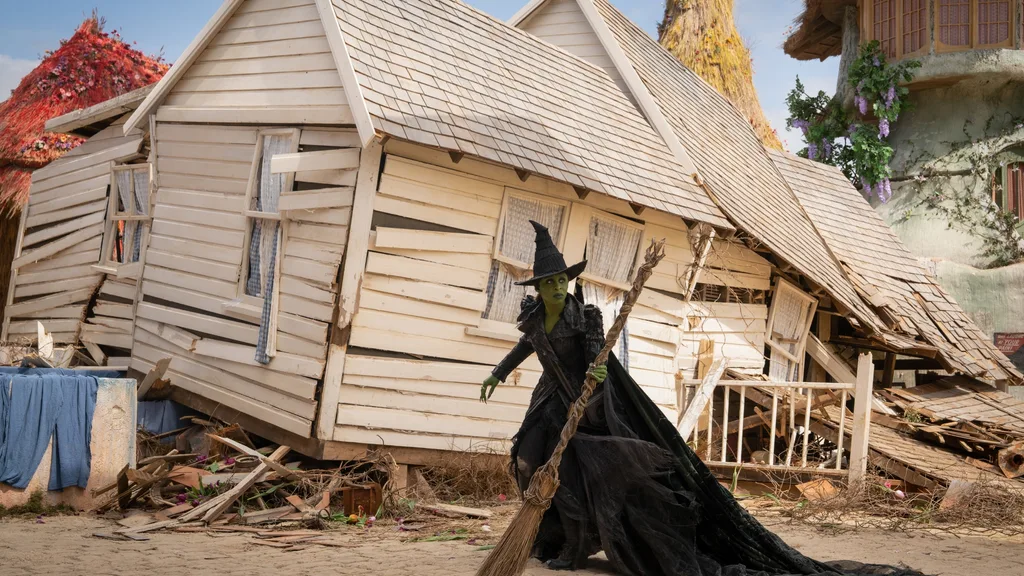
One of the most iconic moments in The Wizard of Oz is the shot of Dorothy’s house crushing Nessarose, complete with the Wicked Witch of the East’s striped legs curling beneath it.
In Wicked: For Good, the moment is omitted entirely.
The likely reason is Jon M. Chu’s desire to keep Dorothy from becoming the focal point. Including the scene would have required placing her directly on-screen and depicting an interaction with Glinda. Instead, the film keeps Dorothy’s presence minimal, offering only a brief farewell as Glinda sends her along the yellow brick road.

