


The first time Zara* cheated on her partner, she felt nothing. No guilt, shame or regret. Not even an inkling that she had done something wrong. Her conscience, it seemed, was otherwise occupied. As she made her way home, the 32-year-old thought the guilt would surely kick in as the alcohol wore off. But in the morning, there was nothing but a throbbing headache.
So she did it again. And again. And again. Multiple times a week for a month or so, Zara and Mateo* met up in secret. Her partner, Joshua, was none the wiser. “We’d been together for six years but didn’t live together, so there was a lot of time I didn’t need to account for,” she says. “I would text him to say I was at dinner, and he never wondered who with, or when – or if – I got home.”
Logistically, sexually and morally, the affair was easy. But at some point, Zara did start to wonder if she had a morality chip missing. Why didn’t she ever feel guilty? “I started to become really consumed with, ‘Why don’t I feel bad?’ and the only thing I could come up with was that I’d been cheated on by an ex, and now it was my turn. And the universe was making it easy for me because I’d had such a hard time all those years earlier. It’s pretty deranged logic.”

Eventually, Zara broke up with Joshua without telling him about the affair, and continued to see Mateo for another year – until she cheated on him, too, with a friend of a friend, Ben. “I still never felt guilty, but I definitely felt like there was something wrong with me,” she says. “Like, I’d never done this before, and now I’m doing it twice in a row? I should be in jail,” she jokes.
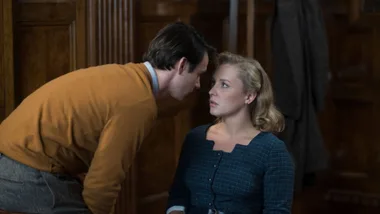

Far from being locked up, what cheating women need is understanding and a listening ear that’s curious rather than judgemental. Silence stands in the way of honesty, repair and the ability to build stronger relationships – with their partners and themselves.
When men have affairs, it’s the stuff of locker-room talk and boys’ night bragging. It’s not entirely shocking to hear of a married man straying. But when a woman does it, she’s treated with contempt, judgement and scorn. And so women don’t talk about it, and they think there’s something wrong with them.
Women are made for romance, for settling down, for fairytales and happy endings, we’re told; it’s men who stray, who roam, whose sexual appetites are so heightened that they’ll look elsewhere as soon as their partner claims one too many bedtime “headaches”. But all the while that narrative has been spinning, the rates of female infidelity in heterosexual relationships have been increasing yet men’s rates have remained steady.
According to research cited by the wildly popular psychotherapist and author Esther Perel, between 1990 and 2017 there was a 40 per cent jump in the number of women having affairs. And last year, a study found that we’ve achieved infidelity parity.

“Women are wired for sexual variety, novelty and adventure. Women cheat in every society, even in ones where they are put to death for it,” says Wednesday Martin, a New York-based researcher, social commentator and the author of Untrue: Why Nearly Everything We Believe About Women, Lust, and Adultery is Wrong. “It’s time we accept that, however we feel about it personally, stepping out on a long-term partner is a regular feature of female sexual behaviour, not just male sexual behaviour.”
We may have closed the affairs gap, but insight into the reasons women cheat has been understudied. We know men tend to cheat from a place of insecurity or a lack of attention or praise from their primary partner, but until now researchers have struggled to agree on what drives women to look outside their marriages.
In the 2024 study, published in the journal of Evolution and Human Behaviour, researchers surveyed 254 heterosexual men and women from across the globe who were currently or previously engaged in an affair with the precise mission to find out why women were cheating.
The findings were interesting: many women rated their sidepiece as more physically attractive but less parentally attractive and with a worse personality than their primary partner, which dispelled the hypothesis that women cheat to “mate-switch”, an upscaling tactic that also minimises the chances of being single in a society that’s taught women they need a man’s resources to survive.
So, if women weren’t necessarily looking for a new relationship, what were they looking for? One participant said she wanted extra help with her kids, many said they were seeking revenge on their unfaithful partners, others wanted to feel like they were still attractive to other men, and several said they were simply bored. The study also found that women are more likely to cheat when they feel dismissed by their partner or fall in love with someone else.
Zara, now 42, says both of these scenarios apply to her. The affair with Mateo was easy because Joshua wasn’t curious about her. “He didn’t really ever ask questions about what I was doing or how my day was, which, at the time, felt like trust and freedom,” she says. “But now, I can see that it was just complete disinterest in me and my life. My thing with Mateo grew in the space where Joshua’s interest in me as his partner should have been.”

And what about the affair with Ben? “Mateo and I never really got serious – I didn’t introduce him to any of my friends, he kind of stayed a secret. I was keeping him around until I found someone I could actually see a life with. I was too scared to be single, and when I fell in love with Ben, I was too much of a baby to end it with Mateo.”
Affairs can also stem from the mental and household load women typically carry when they become mothers. In the latest Household, Income and Labour Dynamics in Australia (Hilda) survey, in 2022, men spent an average of 12.8 hours a week on housework – the same as they did 20 years prior – while women do an average of 18.4 hours (50 per cent more than two decades ago). When you’re the primary caregiver for your children and your partner, sometimes you just want something all to yourself.
For Lisa, a 40-year-old mother of two who’s been married for 18 years, that something came in the form of her handsome and flirty colleague David. “I had spent years being the responsible wife, mother and caregiver, and my needs were background music to everyone else’s leading vocals,” she says. “At home, I had become this pared-down version of myself, and I didn’t even notice it happening.” Her marriage to Michael* wasn’t bad, exactly, just a bit meh. “It wasn’t toxic, it was quiet, dutiful, predictable. At some point along the way, I stopped feeling like a woman and more like a co-manager of a household.”
And then along came David, whose well-tailored and clean-shaven presence in the office became irresistible. “There was chemistry between us, but I ignored it for a while. Given we saw each other every day, the connection grew,” Lisa says of the “non-dramatic” start of their affair. “He gave me the feeling of being wanted: not relied upon, wanted. He looked at me with hunger instead of expectation. It was about remembering there’s a version of me that still has desire. I’d forgotten who she was.”
The moment Lisa knew she’d crossed a line actually had nothing to do with sex – that came later. “I knew it had started the moment I deleted a text I didn’t want my husband to see. That was the point of no return,” she says. “I felt nauseous and euphoric – it’s wild how the same moment can give you a high and hollow you out completely.”

Dr Tammy Nelson is a sexologist and psychotherapist and the author of several books on infidelity, including 2019’s When You’re the One Who Cheats. She’s seen the difference between men’s and women’s affairs play out in real time in her practice and undercover online as a consultant for Ashley Madison, the infamous dating site where married people go to have an affair. Despite the 2015 data leak that saw the names and email addresses of its 36 million users made public, the site still claims more than 65 million members.
Having direct access to that many unfaithful spouses is an infidelity researcher’s dream. Earlier this year, Nelson was allowed to create two profiles: one male, one female. She provided little by way of personal information: no photograph, only a name, hair colour and height. She didn’t respond to any messages, but watched them pour in. “When I was a woman, men sent me requests saying, ‘I’m not going to leave my wife, but I am really not interested in a one-night stand. I really want a girlfriend who I can connect with. I want to text every day. I don’t want you seeing a whole bunch of other people.’
They really wanted a relationship,” she says. “All of them.” When Nelson was a “man”, “all the messages I was getting from women were all lingerie photos, boob shots, and they all said, ‘Look, I don’t want to hear your problems. Don’t tell me about your day. I just want to have hot, Fifty Shades of Grey sex while my kids are at school.’ Women are tired. They want to escape. Whereas the men, they’ve already got a relationship, and they want a second one.”
It’s a generalisation, Nelson says, but the men who are cheating often do so because they “feel emotionally abandoned. Their wife or partner is overwhelmed by the responsibilities of being a woman. He wants to be her first priority, and when he can’t be, he finds someone else. Whereas the woman just wants to have sex and enjoy herself because she’s already taking care of everyone else.”
Nelson adds that these differences also demonstrate that everything we’ve been taught about female sexuality is wrong. Studies show that in long-term heterosexual relationships, it’s the women who get bored with sex first. “Married men will keep having sex even if it’s boring, whereas women will lose interest or it’s just not satisfying, and they’ll shut it down,” Nelson says. “Then there’s resentment in the middle of the bed.” Both partners think the woman has gone off sex altogether.

In writing Untrue, Martin found “an epidemic of female sexual boredom among married or cohabiting heterosexual women in Western industrialised society”, she says. The idea for the book came from first-hand experience. “When I had been happily married for nearly 20 years and realised I was still attracted to and sexually curious about other people, I thought there was something wrong with me,” she says.
Now, she wants women (and men) to know: “No, she hasn’t gone off having sex. She’s gone off having sex the same way with the same person over and over again, because she is a woman.” Nelson agrees: “I don’t think it’s pathological to not want to have sex if it’s boring,” she quips. “Traditionally, women have been conditioned to not ask for what they want or even know what they want,” Nelson continues. “It can be easier to shut it down, maybe seek it elsewhere.
Sometimes it’s easier to say what you want to someone who you don’t really know that well, because shaking it up at home can feel threatening.” “Everyone benefits when we educate people that women evolved for and thrive when they have sexual variety, novelty and adventure,” Martin adds, “and that they wither sexually without it.” By not asking for what they want, you might say, women are only cheating themselves.
While some women, like Zara, cheat to leave a relationship, some women cheat to stay in one. Lisa has no intention of ending her affair with David or leaving her marriage to Michael. “The secrecy was exciting at first, but then the guilt crept in. I’d look at my daughter sleeping in her crib and I’d feel pretty sick,” she says. “I kept wondering, ‘What kind of woman does this to her family?’ Apparently me. And I can’t stop.”
Still, she credits her affair with improving her love life at home. “I started initiating more intimacy with Michael, and I think he feels the shift, even if he doesn’t understand it,” she says. “There’s more intimacy in the air. I also feel happier. It’s so complicated.” Maybe having something just for herself makes it easier to be everything for everyone else.

Margot, now a 70-year-old grandmother, also had affairs as a way to stay in her marriage. It was the late 1970s when she wed Christopher at the tender age of 22. They’d only been newlyweds for a few months when she had her first affair.
“I was already regretting the marriage. Everyone told me I should marry him, so I did what people told me to do,” she recalls. “I tried to leave him once, but my mother sat me down and told me to stay with him. But I was never committed to the marriage. I had many affairs.”
Margot didn’t hate her husband, he just wasn’t right for her. “He was a decent man in many ways – he had a steady job, he was good on paper – but I felt invisible,” she says. “He was working so much and I was home with the children, and we weren’t growing together. I wanted connection, freedom, laughter. I wanted to be wanted, but I also wanted to be understood, and affairs gave me that, at least temporarily.”
Her trysts gave her the strength to make the most of a marriage she didn’t want to be in but couldn’t get out of. Divorce was still so taboo. “Every time I came close to leaving, I would look at the children and tell myself to wait a little longer, ‘Not yet,’ ” she says. And so, when the kids were at school and her husband was at work, she’d invite other men over. There were a few close calls – like when a school mum stopped by to drop something off while Margot’s lover hid in the bedroom – but her infidelities stayed secret for decades.
It was only when Margot met and fell in love with Paul*, when she was 40, that she confessed the truth to Christopher. “[The fallout] was awful, it was the hardest thing I’ve ever done,” she says. “I became The Woman Who Ran Off. I lost most of my friendship circle, and people accused me of leaving my children, which I didn’t. It was painful but necessary, and I don’t regret it. I left at the right time: I left when I found my soulmate, the man I’ve now been with for almost 30 years, the love of my life.
I’m so grateful I met him. I’ve never cheated on him because he fulfils me. I found happiness and stopped needing something outside of my marriage.”
The reason many women (and men) cheat can have nothing to do with what’s lacking in their marriage and instead have everything to do with what’s missing within themselves. In recent years, a new guard of therapists and researchers – which includes Perel, Martin and Nelson – have posited that affairs aren’t always about turning away from your partner and towards someone else; they’re often about turning away and towards different versions of yourself. “I don’t think people necessarily look for another person,” Nelson says. “I feel like they look to be another person.”
In this way, infidelity can be seen as an act of self-discovery. While that can sound like a generous get-out-of-jail-free card, it’s merely the reality for a lot of couples dealing with infidelity. For Lisa, her affair allows her to spend time with a version of herself who feels desire and is desired in return; for Margot, her affairs were about embracing the freedom of her youth from the confines of a traditional, and reluctant, marriage. Nelson knows that even if we can define the different reasons men and women cheat, there’s no way to prevent infidelity.

What she would like to prevent is the lying. “It’s the dishonesty that’s painful,” she says. “The breaking the promise.” She recommends couples agree on a definition of monogamy early on, and check in regularly.
“If we’re going to be married for 50 or 60 years, we have to come to some flexible understanding that we might be attracted to someone else during that time, but we don’t need to trade in our partner.” She suggests incorporating your desires into your relationship so you don’t feel the need to lie.
It’s about safe destabilisation. Do you want to go to a sex club together, do you want to talk about a threesome? “You can say, ‘I don’t want to lie, I don’t want to cheat, I don’t want to get divorced, I’d like to stay with you and explore these things together,’” she says. Then there’s only one version of yourself to turn towards: your true self.
*Names and some identifiable details have been changed.

