Kristina* always knew, when it came time to have the baby she always wanted, that she’d need a helping hand. Hearing the challenges and judgement that fellow LGBTQI friends had experienced going through IVF – including comments that questioned their right to use IVF due to their sexuality – Kristina decided to look for an alternative pathway to motherhood.
“When a friend told me about online platforms to find [sperm] donors, I joined some and became quite active,” she explains. “I enjoyed seeing people succeed and have their bundle of joy, so I decided to make my own group.”
In 2015, Kristina established the Facebook group Australian Sperm Donors, Surrogacy & Co-Parenting to help single people and couples who yearned to be parents but, for reasons such as sexuality, romantic, health or financial circumstances, faced difficulty.
A decade later, it’s amassed more than 5600 members. It’s essentially a database of egg donors, sperm donors, surrogates, couples looking for donors and single people looking to co-parent with another person, without a romantic attachment.
In 2023, Kristina and her then-partner conceived their daughter via artificial insemination (AI) using a sperm donor she had found through the Facebook group. AI or intrauterine insemination (IUI) involves inserting the male partner’s (or donor’s) prepared semen through the neck of the womb (cervix) and into the uterus, usually with a small catheter or needleless syringe, close to the time of ovulation. Choosing this path was based on what suited her family best. Being able to take a more active role in the reproduction journey was important for Kristina as a lesbian and Aboriginal woman.
“Historically, our ATSI [Aboriginal and Torres Strait Islander] and LGBTQI community has faced generations of injustices and trauma that stripped us of our autonomy and self-determination,” she explains. “By taking control of my own fertility journey, I was able to reconnect with my cultural heritage and assert my rights as a gay parent and individual.”
Affordability was another factor. On average, one round of IVF costs a patient $10,000 to $12,000 before Medicare, Pharmaceutical Benefits Scheme (PBS) and private health insurance subsidies. After these, this amount sits between $2000 and $3000 per round, depending on the type of treatment chosen. With fewer than 50 per cent of women successfully having a baby after one round, the process can quickly add up.
“At the time, we were struggling to afford IVF,” says Kristina. “We couldn’t help but notice the significant financial burden it placed on us and others in similar situations. We questioned the ethics of charging exorbitant amounts of money for fertility treatments, particularly for marginalised groups like same-sex couples.”
Despite founding the Facebook group, Kristina says she still found the process of selecting a donor overwhelming. “Navigating this platform and finding the right donor was a daunting task, especially given the significance of this decision,” she explains. “It’s like meeting a new boss or someone of high esteem – it makes you nervous.”
It is illegal to accept payment or pay for egg and sperm donations in Australia, so the process involves altruistic donors posting their interest and availabilities, general information about themselves, and a photo on the Facebook page, or vice versa, while men, women or couples who are seeking a donation provide insight into themselves and what they want in a donor. Interested parties then reach out by commenting on the Facebook post or sending a direct message to continue the process.
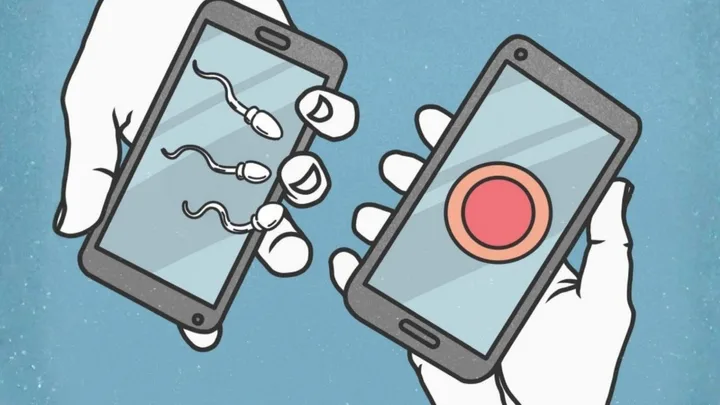
There is also a searchable database on the Facebook page, where you can select filters to help find someone who matches what you’re looking for. Kristina and her partner chatted with several potential donors to learn more about them as people, rather than just donors. This made the process more personal and ensured their pick ticked off the specific requirements that they had: someone with an education, spiritual and cultural interests, empathy, kindness and a calm nature.
“[I wanted] someone I vibed with, who understood the importance of this journey for us and was doing it for the right reasons,” she says. The donors in the Facebook group undergo vetting, including identification checks, disclosure of health/ background information and STI status.
Serious safety concerns are reported to the police and Facebook’s owner, Meta. The group has had to remove some bad actors who breached or failed to comply with the group rules, including requesting payment for donations or sexualising the process by sending nude photographs, but Kristina says the negative experiences have been outweighed by the success stories – including her own – which number in the thirties.
After five months of looking, Kristina finally found someone she and her partner liked. The only problem? They lived interstate. So, once a month, Kristina would drive eight hours one way to collect a sperm donation inside a specimen cup, then find a secluded location nearby where they’d park and either Kristina or her partner would do the insemination. “You can’t have it outside the body for too long or it starts to die,” explains Kristina. “Due to my long history in the health field and nursing career, I was able to use my skills to do this process in a sterile, safe environment.”
Because of her polycystic ovarian syndrome (PCOS), Kristina’s medical specialist was also involved at various stages throughout her journey, giving injections of Ovidrel to help trigger ovulation, which also had to be timed correctly with the AI. “My ovulation and mucosal lining were not correctly aligned due to PCOS, age and hormonal instability,” she says. “I needed a bit of a hand.”
After two years and five rounds of artificial insemination, she had a positive pregnancy test. Kristina’s daughter, Harper, is now 22 months old, and if all goes to plan, by the end of 2026 she will become a big sister, with the same donor on board to help grow their family.
Using Tinder To Find A Daddy (Literally)
After splitting up with her long-term partner, Cassie* was happily and casually dating, using the usual apps to meet new matches and excitedly getting ready each week to meet someone new. She knew though, as most women do, that time wasn’t on her side to naturally conceive a child. “Women are very aware of their biological clock ticking,” she says. “After having some tests, I knew that mine was ticking quite loudly, and if I wanted to have a child naturally I’d need to make it a priority, so I did.”
Cassie decided to “match up” her dating life with her cycle. By documenting her ovulation cycles using at-home testing kits and aligning Tinder dates with the days she was most fertile, Cassie began trying for her much-wanted baby. Cassie had sex with three different men: one each ovulation phase.
After seven months (and plenty of STI tests), she conceived her daughter, who will turn three in November. While Cassie knows who the biological father is, she has not seen or spoken to him and intends to keep her daughter a secret from him.
“I knew that if I told him, there was a chance it could get messy, and I didn’t want that,” she says. “In my view, he was a sperm donor with whom I also happened to have a fun evening. There is nothing more to it than that.”
As her daughter gets older, Cassie plans to tell her a slightly altered version of the truth, that her dad is a man she “went on a couple of dates with”. “It happens all the time,” says Cassie. “Women get pregnant from one-night stands and the man doesn’t want to be involved. Sometimes, even long-term partners don’t want to be dads, and sometimes dads are present but are shitty parents. I don’t think there is a perfect or right way.”
There’s An App For That
Where Facebook groups and Tinder dates are the unregulated wild west of conception, a new crop of regulated apps promise to help women find people who want to co-parent without the romantic commitment.
For as long as she can remember, Samantha Fruzynski had wanted to become a mother, but when the pandemic put a roadblock in her dating life and fertility testing revealed a low egg reserve, she decided to investigate other options.
“For me, it was more important to have a child than to have a partner. So I decided to go ahead with the process and have a child on my own,” she says. Samantha turned to IVF, where she looked at several different clinics, ultimately choosing City Fertility because they were one of the only Victorian clinics without a wait for sperm donations. “They told me I’d be waiting at least two years to get to the top of the list to be able to access sperm at another clinic,” she says.
Samantha had her first baby, Imogen, in 2023 after using the Addam Sperm Donor Bank app. She is one of thousands of people who have reserved donor sperm since City Fertility launched the app in 2021.
Described as the “Tinder for sperm donors”, Addam allows users to swipe through City Fertility’s sperm donor database and select preferences – such as eye colour, height, ancestry, education and relevant medical history – through the app’s filters to find a match.
Once a donor is selected, the user can place a request via the app and will then be contacted by a member of the City Fertility team to set up an appointment with a fertility specialist to take the next steps.
Samantha says she researched various options, including Facebook groups, before choosing the Addam app. “I just liked the fact that everything is so regulated,” she explains. “The person who was donating has been screened for STIs and diseases, genetic issues, if they’re carriers of any diseases. Their mental health has been screened as well.”
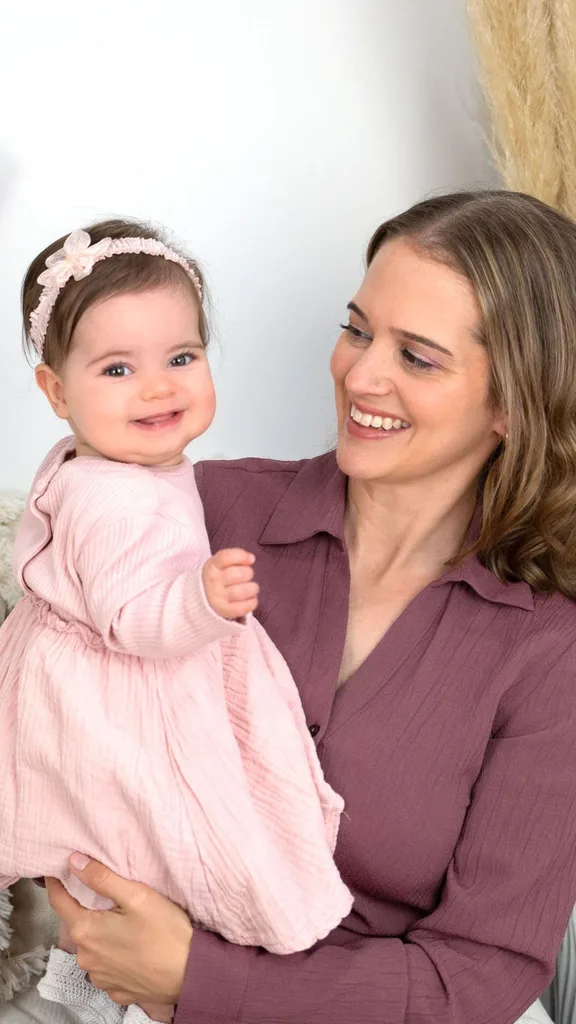
One important part of the subsequent stage is counselling, which Samantha says focused on ensuring that she understood the process of IUI and IVF, the legalities of using donor sperm in Victoria, and how to discuss being donor conceived with a child. “It also offered an explanation of the terminology and explained the procedures,” she says. Samantha has begun age-appropriate conversations with her nearly two-year-old daughter about being donor conceived.
“When she asks, ‘Do I have a daddy?’ I say, ‘No, you have a donor,’” she explains. “I haven’t gone into depth with her yet about what a donor actually is, but I just want her to have that word. When she gets a little bit older and her comprehension’s a bit better, I’ll fully discuss it with her. But, for now, I’m just trying to get the message through to her that every family is different, and she doesn’t have a dad.”
In many states there is a legal restriction on how many families a sperm donor can donate to, in an attempt to prevent incestuous relationships between unknown donor siblings. The number varies: in Victoria, Queensland and South Australia, a maximum of 10 families can have children from the same sperm donor, whereas in NSW, WA and the ACT the number is just five families. Another selling point for using the app was the family cap.
“With some of these people on the Facebook pages, it seems like they are saying ‘Yes’ to anyone who asks them, ‘Would you donate sperm?’ So I just thought, as much as I want a child right now, I also need to consider her future,” explains Samantha. “If I’m finding someone off a Facebook page, she could potentially have 200 siblings, which may pose an issue in the future.”
But, Is It Legal? Kind Of.
In the case where Cassie had a one-night stand that turned into a secret pregnancy, family law specialist and secretary of the Fertility Society of Australia and New Zealand (FSANZ), Stephen Page, says that while legally a woman does not have the obligation to tell someone that he is the biological father of her child, she should be prepared for the truth to come out, which it often does.
“Those kinds of cases, where two people have no connection at all other than that they conceived a child together, have the potential to have a dozen years of litigation,” he says, “because his views about the best interests of this child happen to be quite different from hers. My clear advice is: don’t do that. If you’re going to plan a child, do it the right way.”
From a legal standpoint, Page says doing it “the right way” involves using pathways such as fertility and IVF centres, as these are accredited by the Reproductive Technology Accreditation Committee (RTAC).
They also adhere to strict laws that are determined by the state or territory they operate in. On the other hand, the legalities around conceiving using options that aren’t accredited by the RTAC or regulated by state law, including sourcing sperm via Facebook groups, can be blurry.
“One of the reasons that sperm and egg donation Facebook sites are so popular is the view that they want their child to know where or who they’ve come from,” says Page. “The downside is that, legally, there’s a lack of certainty about whether the man is a parent or a donor, and the test that the High Court has told us is that it’s a matter of intention.” This can be more complicated if a woman chooses sex to receive the donation.
“If the child is created through sex, it is unclear if the man is a parent,” adds Page. “It might depend on whether he wanted to become a parent at the time they had sex.” Choosing unregulated pathways can also be unsafe because you’re putting yourself at risk of STIs and the transmission of inheritable conditions to your child, which can be tested for through other channels.
As recently as July this year, news broke of a Melbourne man, Andrew Veitch, who donated his sperm to 15 women (violating the state’s family cap), whom he predominantly met through donor-matching social media groups, resulting in 27 births.
This is not the first case of this sort of thing happening in Australia, says Page.
“A few years ago, another man used multiple aliases and fathered about 60 children.” But it’s not just social media groups that can put people at risk, says Page. Co-parenting apps also offer databases where women can search for donors or for other people who want to start a family.
These, too, can face the same issues, as they are not regulated or accredited in the same way fertility centres are, and there is no central registry of donors or how many donations they’ve made. “Regulating apps, groups and sites will be difficult but not impossible,” says Page. “Intended parents need to know who they are dealing with. There needs to be verifications about STIs and family limits.”
Kristina also views regulation as the way forward for her Facebook page and others similar. “If there’s anything I’d change, it’s having this platform being regulated like other donor services, to ensure its members care,” she says. “At the moment, a lot comes down to trusting the other person involved, but that doesn’t always work out.”

Related stories

Native ad body.

Native ad body.

Longevity & Beauty Powered By Science – How Swisse Nutra Fuels Cellular Health

Native ad body.