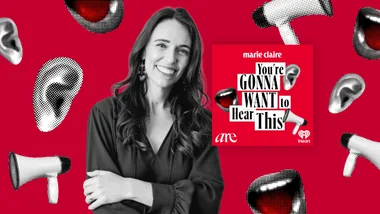
“I feel fucking amazing in my 60s,” Trinny Woodall tells marie claire editor Georgie McCourt in this week’s episode of You’re Gonna Want To Hear This. “In your 60s, it’s about knowing what you don’t want. You’ve had some history, you’ve gone through a bit more, so when something comes up you can reject it quicker. You don’t go down the rabbit hole. You go, ‘No, that is not for me… I’m going to suddenly dress like a sexy 30-year-old, I don’t give a shit, and I don’t worry about what people think.’”
Listen To You’re Gonna Want To Hear This
Starting Over At 53
She’s the founder and CEO of Trinny London, a global beauty brand she launched at 53 after selling the Notting Hill home she’d poured her dreams into. “It’s shifting what is the most important thing to you,” she explains. “When you change that narrative, it’s easier to let go of other things.”
Letting Go Of The Dream Home
After years of travelling for work as the main breadwinner and dreaming of walking her daughter Lila to school, Woodall bought and renovated the house she’d always wanted. Then everything changed. Residual TV income dried up. Personal crises hit. The fledgling business idea she couldn’t shake needed more money for formulas, testing and packaging.
First, she sold her clothes. Then, she rented out the house and moved into a tiny flat. Eventually, even the mortgage had to go. “It was a process of making it easier to make the decision by the small things that were happening,” she says. “As those small things were happening, the excitement that the possibility of Trinny London could happen… it fed my sense of: it’s okay to rent out the house, it’s okay to do this, because there’s a tiny little glimmer of something there.”
Redefining What We Value
Woodall understands the attachment we have to things, especially for women. “We attach importance to things because our parents saved up and bought a home,” she says. “Right now, I live in a rental. It’s not the asset you need to leave your child. I got no money from my parents and I started my career at 18 and I’m okay. I don’t want to be so indulgent to [my daughter] that she doesn’t find her path.”
Motherhood: Testing, Rewarding – And Lonely
Motherhood, she says, is less “challenging” than it is “testing, frustrating, incredibly rewarding – and lonely.”
“It sounds so corny, but it’s a privilege to raise a daughter,” she says of Lyla, who lost her father at 11. “The hardest part is wanting to protect them from everything and navigate their path for them, when there’s an element they should be navigating themselves – especially when you’re a single parent and you don’t have that counterbalance at home.”
The Beauty Rules That Actually Matter
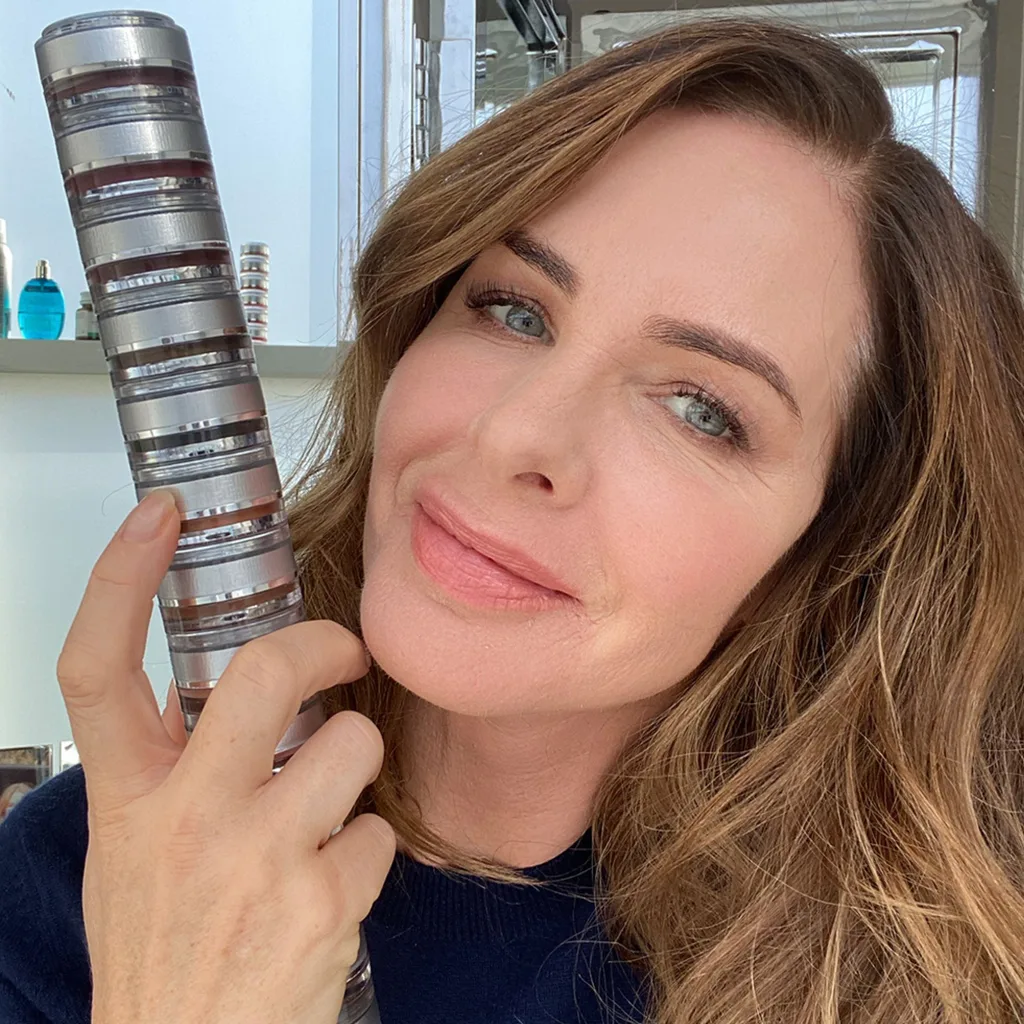
For the woman who built a beauty empire, she’s startlingly unsentimental about the product noise. She’s lived through every beauty era and come out obsessed with one thing: what actually works. Her own acne, which started at 13 and continued into adulthood, sent her deep into ingredient lists and onto Roaccutane and lasers. Now, she’s evangelical about smart vitamin C (“especially in Australia,” she notes), retinoids, exfoliation and SPF – not as buzzwords, but as non-negotiables.
“There is so much confusion,” she says. “When you buy your best friend’s ‘magic cream’, that might not be your best vitamin C. The most important thing is that the ingredients work – and that they’re right for you.”
Rethinking “Ageing Gracefully”
The same pragmatism applies to ageing. When a follower recently commented on social media that she should “age gracefully” after she posted a new all-black, thigh-skimming outfit and over-the-knee boots (picked out by a friend recovering from breast cancer), Woodall decided not to ignore it.
“For me, ‘ageing gracefully’ is becoming invisible,” she says. “So I asked her, ‘How visible do you feel in your life?’ Not in a ‘look at me in the room’ way, but do you feel seen? If ‘ageing gracefully’ is gently fading away, challenge yourself.” Visibility, she insists, is not synonymous with youth – or even with sex. It’s about owning your presence. “I think it’s important as a woman to feel one’s own sense of sensuality, however you choose to interpret that,” she says. “To lose that sense of our own sexuality is dangerous. It makes us disconnected from our vibrancy.”
Success, Failure, And The Relentless Next Thing
She applies the same clear-eyed honesty to success and failure. Despite heading a brand that sells a neck treatment every 28 seconds globally and winning major industry awards, she admits she often struggles to see her own success. “I’m always thinking about what we haven’t done yet,” she says. “I have to remember to be celebratory with the team. Otherwise my head has already gone to the next thing.”
Failure, on the other hand, she’s made peace with, crediting her friend Elizabeth Day’s How To Fail podcast and her own business collapse in 2001. “The learnings I had from that are 10 times more important than the learnings I get from when Trinny London is successful,” she says. “When you’re doing well, you maybe get into a cosy situation and don’t challenge yourself as much. I like challenging myself.”
As for being seen as a role model? She resists the label, but not the responsibility. “I see myself as a person who has influence,” she says. “Every person you meet has helped you buy your house. The ability I have to send Lila to a private school or fly business class is because somebody has bought a book, or watched a show, or bought a product. I have a responsibility to them.”
The One Lesson She Wants Women To Hear
And if there’s one message she wants women to take from the episode? It’s this: “You never know what’s behind the closed door,” she says. “We can set a narrative where we lower the sense of our ability of what’s possible. If you accept you don’t know, then you can open up the possibilities again.” New decade. New narrative. And, if Trinny has anything to do with it, absolutely no fading gracefully into the background.
Listen now: You’re Gonna Want to Hear This is available via the iHeart app, marieclaire.com.au, or wherever you get your podcasts.

Related stories

Native ad body.

Native ad body.




Native ad body.