

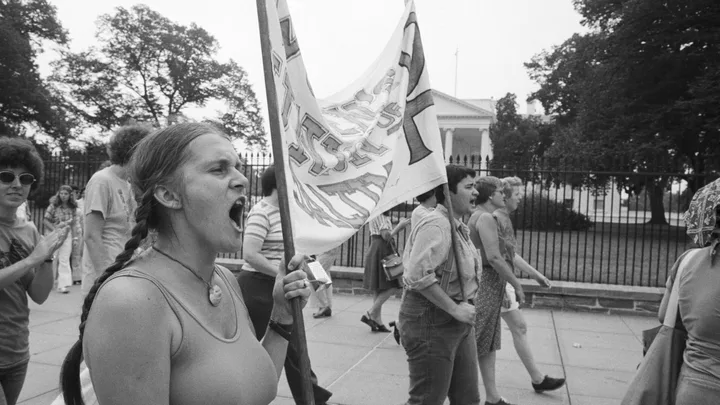
We like to believe 2025 is an era of unfiltered expression. But the past few weeks have made it clear: free speech isn’t about what you say, it’s about what those in power will let you get away with.
The suspension of Jimmy Kimmel after he mocked the Trump administration’s handling of Charlie Kirk’s assassination is a case in point. He told a joke. Regulators hinted at pulling broadcast licences. Disney folded in hours. Technically, Kimmel’s rights remain intact. Practically, his voice was silenced. And here’s the uncomfortable truth – women have lived in this reality forever.
When Consequence Becomes Control
The new phrase everyone’s bandying about is “consequence culture.” The idea is simple. Say something, live with the fallout. But what happens when those “consequences” are shaped by billion-dollar mergers, partisan politics, or the weaponised rage of an online mob? That’s not culture – that’s control.
Women recognise this instantly. We’ve always had to calculate the cost of speaking. Will calling out sexism at work get me sidelined? Will posting about reproductive rights invite harassment? Will simply existing online trigger a pile-on? The right to expression may be universal on paper. The price of it is not.
The Charlie Kirk Irony
The irony is almost too much. Just a year before his death, Charlie Kirk himself tweeted that there is no such thing as “hate speech” under US law – only ugly, gross, even evil speech, and that all of it is protected. “Keep America free,” he wrote. Today, his name is being used to justify shutting down the very speech he claimed to defend. Freedom, it seems, is negotiable when it comes with a cost.
Australia’s Silence Gap
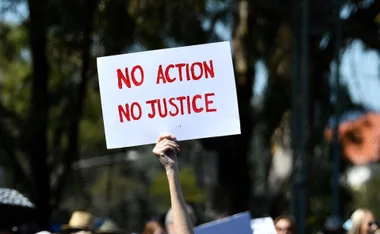
It isn’t just America. In Australia, women’s voices are routinely policed, muted or punished when they cut too close to power. Brittany Higgins’ testimony about an alleged assault became a political firestorm that left her vilified. Grace Tame was told to “smile” for the cameras after calling out sexual abuse in plain language. Journalists who press politicians on women’s safety or climate policy are dismissed or mocked.
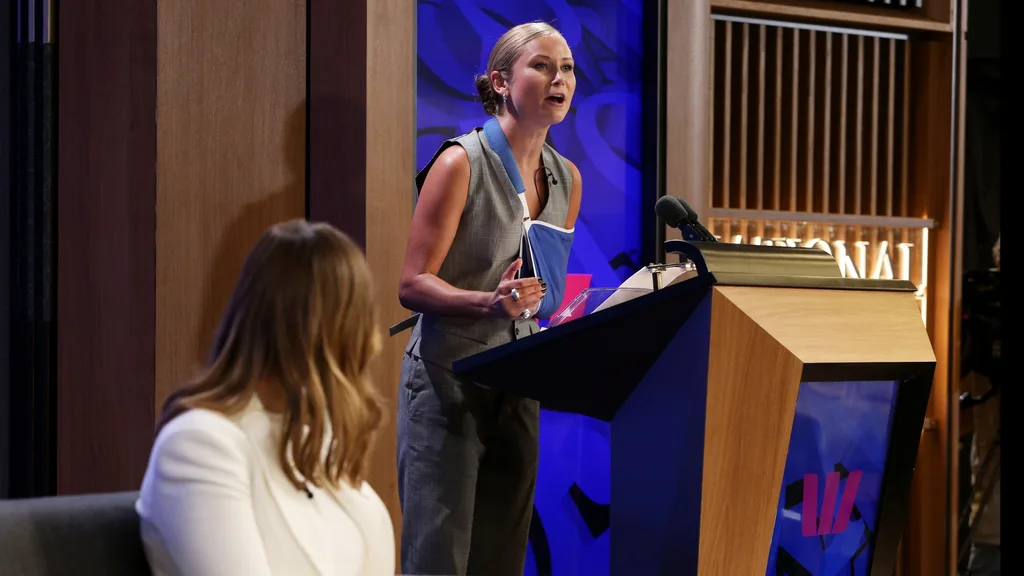
And then there is the sheer hostility of online life. As Australian human rights lawyer Jennifer Robinson told marie claire: “In this new online space as a woman, it’s shocking the number of death and rape threats we get for simply having a public voice – and that I have received as a woman in the law with a public voice. I didn’t get anywhere near the online vitriol that
Amber Heard received, including the death and rape threats towards her and her baby. I can’t imagine what Amber has gone through. But it’s happening to women everywhere. I won’t be made to be silent, but we have to do something about it because women are being pushed out of public spaces and we need more female voices.”
Her point underscores the lived reality: free speech exists in theory. But for women, the cost of exercising it can be brutal – and often literally life-threatening.
The Corporate Gatekeepers
The Kimmel saga makes clear that speech isn’t policed solely by courts or governments. Increasingly, it’s corporations that decide who gets a platform. Executives in boardrooms weigh free expression against advertising revenue and stock prices. Speech has become commodified, priced in real time against profit margins.
And this too is familiar to women. Our visibility has always been conditional – tolerated until it becomes too loud, too sexual, too political, too threatening. Then the consequences arrive.
The Real Battleground
The paradox is glaring: we’ve never had more platforms to speak from, and yet the boundaries feel tighter than ever. The question isn’t “can you say it?” but “can you survive what happens next?” That’s the calculation women have always had to make.
Free speech, it turns out, was never free. It has always carried a price. What’s different today is how openly that price is being tallied, who is asked to pay it, and whose silence is deemed most profitable.

