

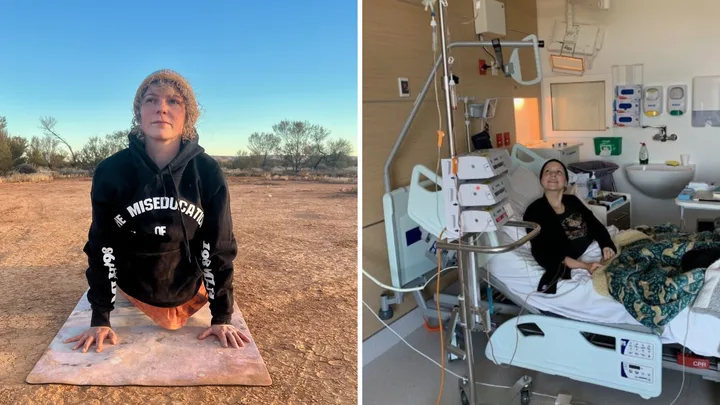
On 5 September 2025, I shared my journey with acute myeloid leukaemia (AML). I didn’t have obvious symptoms at first – nothing that couldn’t be explained away. I was tired and fatigued, but I blamed that on working hospitality jobs with long, late shifts. It was a routine blood test that showed something wasn’t right; my white cell count was off. My doctor asked me to redo the test, but before I did, I flew back to the UK for a friend’s wedding. When I returned to Adelaide, I retested. At my next appointment, my doctor referred me to the haematology ward to investigate for blood cancer.
Days later, I was told to report immediately to emergency and stay overnight so they could monitor my blood counts. The next day, I had a bone marrow biopsy. That same afternoon, I learned I had AML.
Looking back, there were probably signs I missed, but I had no idea they pointed to something so serious. That’s why I believe it’s crucial for people to know the signs of blood cancer – it can become harder to treat the longer it goes undetected.
Everything Changed In An Instant
Hearing the words “you have leukaemia” felt surreal, like an out-of-body experience. It split my life into two parts: before cancer and after cancer. Everything changed in an instant – my goals, my plans for the year, my sense of control. Suddenly, the only thing that mattered was survival. It’s taken me years to fully process that.
I didn’t have a choice when it came to a stem cell transplant. The subtype of leukaemia I had meant chemotherapy wouldn’t cure me; my only chance of survival was a transplant. I came close to pulling out a few days before, panicking and saying I couldn’t do it. Doctors reminded me that I had no choice. The chemotherapy I’d already had had completely destroyed my bone marrow. We were past the point of no return.
The transplant was brutal. My own bone marrow had to be wiped out to receive someone else’s. The consent meeting was sobering: forty minutes of worst-case scenarios, plus writing my will and advance care directive at age 29. Emotionally, I clung to one phrase: “the only way out is through.” I took it step by step, day by day, refusing to drown in “what ifs.”
The Brutality Of Treatment And The Gift Of A Stranger
One of the most profound lessons came from my anonymous donor—a stranger who saved my life by donating stem cells. That act of generosity reshaped how I see humanity and inspired me to advocate for donor registries. We can save lives in real time, not just through posthumous organ donation, but while we’re alive.
Losing my hair, eyebrows, and eyelashes so quickly was jarring. One month I was fine; the next, I barely recognized the sick woman staring back at me in the mirror. But that experience freed me, too—it taught me I’m not defined by my appearance. I remember asking my doctor right after my diagnosis, “Will I lose my hair?” She gently reminded me there were much bigger battles ahead. She was right.
Some side effects, like fertility loss and early menopause, are rarely talked about, but they’re deeply impactful. Navigating that in my early thirties was painful, especially when friends were settling down and starting families. Invitations to baby showers could feel like daggers. Over time, I learned to be honest with myself and others: “I can’t come to the shower, but let’s celebrate in another way.” That honesty and openness, especially with other cancer survivors, became essential to my healing.
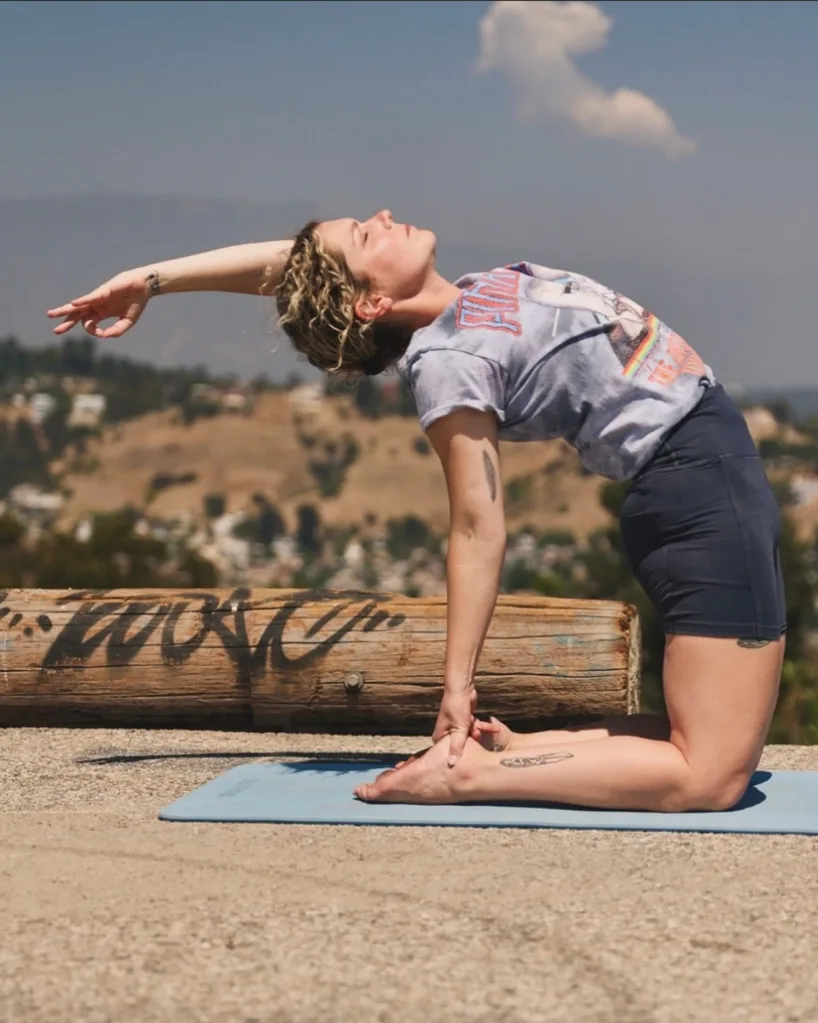
Then came graft-versus-host disease (GVHD), another lifelong battle. It’s a chronic condition I’ll always manage, not cure. Yoga helped me find acceptance—a way to listen to my body each day and honour where it’s at. There’s no going back to “before cancer,” but I’ve learned how to live in this new body.
Therapy gave me space to process trauma, grief, and shock. Yoga rebuilt my trust in my body, and hiking gave me peace and perspective. These practices became medicine, tools I now use to help others.
Early on, I was angry at my body. I’d had a preventative double mastectomy after learning I carried the BRCA1 gene mutation—only to be diagnosed with AML months later. Honesty about that anger was the first step toward acceptance. Slowly, I learned to see my body as a partner, not an enemy.
Losing my dad to cancer at 18 taught me about impermanence, but nothing can truly prepare you for your own diagnosis. His loss did teach me how important community is, though—a lesson that became my lifeline during treatment.
The BRCA gene testing and mastectomy were meant to protect me, so getting AML after that was devastating. I felt betrayed and terrified. Over time, I reframed that pain into resilience. A favourite quote by Jon Kabat-Zinn keeps me grounded: “We can’t control the waves, but we can learn how to surf.”
Life After Cancer
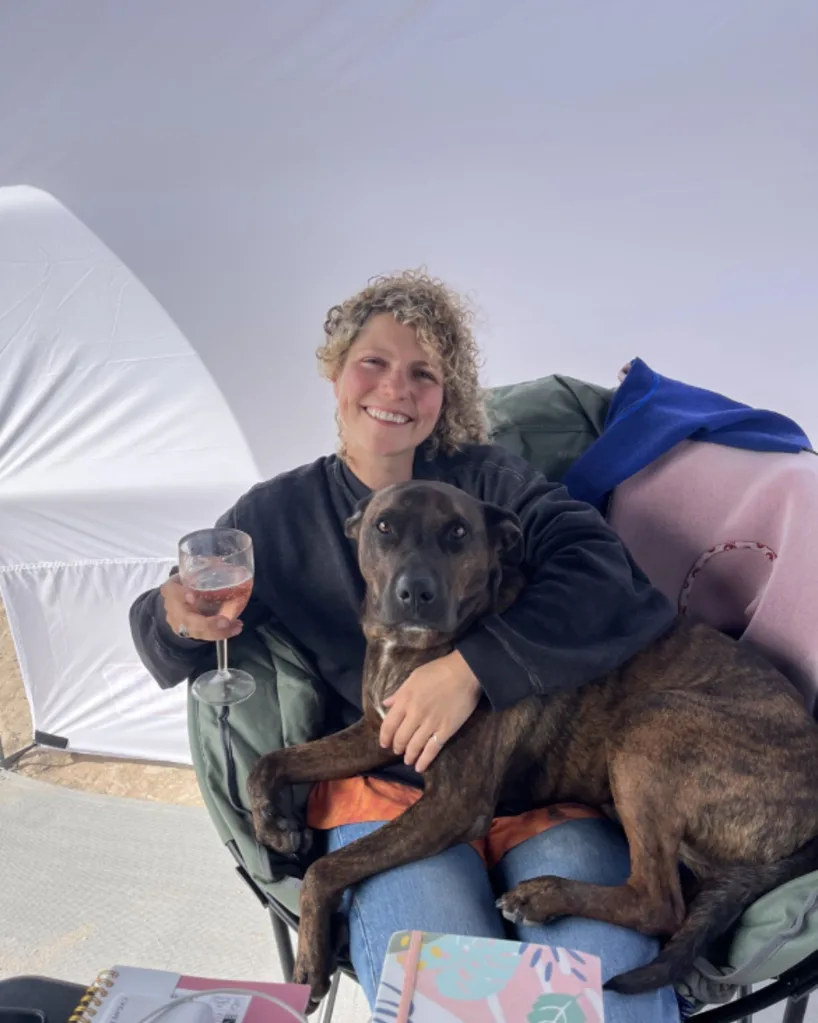
Today, my life is slower, more intentional. I’ve realised that the things we obsess over often don’t matter. What I treasure most are the simple moments – laughing with a friend, walking my dog, watching a sunset. My diagnosis gave me a purpose: to help others. If sharing my story or teaching yoga helps even one person, I’ve done my job.
I became a yoga teacher a year after my transplant because I wanted to create a space I couldn’t find when I was sick – a safe, inclusive place for cancer patients and survivors to feel at home in their bodies. Over the years, I’ve watched people rediscover their strength and return to the studios they thought they’d never step foot in again. That keeps me going.
Hiking the 1,200 km Heysen Trail for the Leukaemia Foundation pushed me further than I thought possible. I didn’t even finish it in one go – I sprained my ankle after about 1,000 km. Soon I’ll finish the final stretch with a friend who also survived AML. I started that journey with no overnight hiking experience, but I wanted to prove life after cancer could still be bold, adventurous, and meaningful.
My doctor once warned me I might not return to the life I had before. When I told him about my 25 km days carrying a 20 kg pack, he laughed and admitted he had to set realistic expectations. That stubborn determination fuelled me when the hills got steep.
If I could share one message with someone going through blood cancer treatment, it’s this: you don’t have to be strong all the time. Give yourself permission to fall apart. Healing isn’t linear. Some days it feels like two steps forward, one step back – and that’s okay. Lean on your community. You are not alone.
We don’t know how much time we have, so why wait? I try to live that every day, appreciating small joys and honouring the friends I’ve lost. I know they’d give anything for another day with their families. I don’t take that for granted. Keeping their memories alive drives me to live fully, now.
What You Need To Know
Sophie’s story is part of a much larger and often overlooked crisis. Blood cancer is now the second most common cancer in Australian women – and the leading cancer among girls and women under 30 – yet it remains largely invisible in the women’s health conversation. In 2024 alone, more than 8,300 Australian women were diagnosed, and that figure is expected to nearly double within a decade. By 2035, over 6,500 women a year are projected to die from blood cancer.
Unlike other cancers, blood cancer cannot be screened for or prevented, and treatments are often more gruelling, involving long hospital stays, relocation for specialist care, and side effects like infertility and early menopause. The financial burden is staggering too, with patients facing double the out-of-pocket costs of other cancers, while many are forced to leave their jobs or dramatically cut work hours.
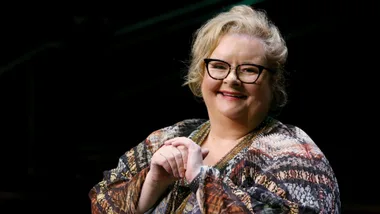
The Leukaemia Foundation is calling for urgent national attention to this silent epidemic, with journalist Edwina Bartholomew, recently diagnosed with chronic myeloid leukaemia, joining as National Ambassador. Together, survivors, advocates, and supporters are pushing for greater research investment, better treatment options, and more support for women and families impacted by blood cancer.
This Blood Cancer Month, the Leukaemia Foundation is urging Australians to get informed and help support girls and women impacted by blood cancer by visiting leukaemia.org.au.
Words by: Sophie Patnicroft-Gray

