A major escalation between the United States and Venezuela unfolded this week after U.S. military forces carried out a large-scale operation inside Venezuelan territory, striking military targets and capturing President Nicolás Maduro and his wife, Cilia Flores.
The Trump administration says Maduro is now in U.S. custody in New York facing criminal charges, including narco-terrorism and drug trafficking, after withdrawing him from Venezuela during the overnight mission.
The operation has sharply heightened regional and global tensions. Countries across Latin America, Africa and Asia condemned the U.S. action as an unacceptable violation of Venezuela’s sovereignty, with emergency United Nations Security Council sessions convened to debate the legality of the strikes. Interim Venezuelan leadership denounced the capture as a “kidnapping” and called for Maduro’s return.
Venezuela’s ambassador Samuel Moncada, described the US’ decision as an “illegitimate armed attack lacking any legal justification” that included “the kidnapping of the constitutional president of the republic, Nicolás Maduro Moros and the first lady Cilia Flores.”
A statement from António Guterres, the UN secretary general was also read aloud in the meeting, stating: “I am deeply concerned about the possible intensification of instability in the country, the potential impact on the region, and the precedent it may set for how relations between and among states are conducted.”
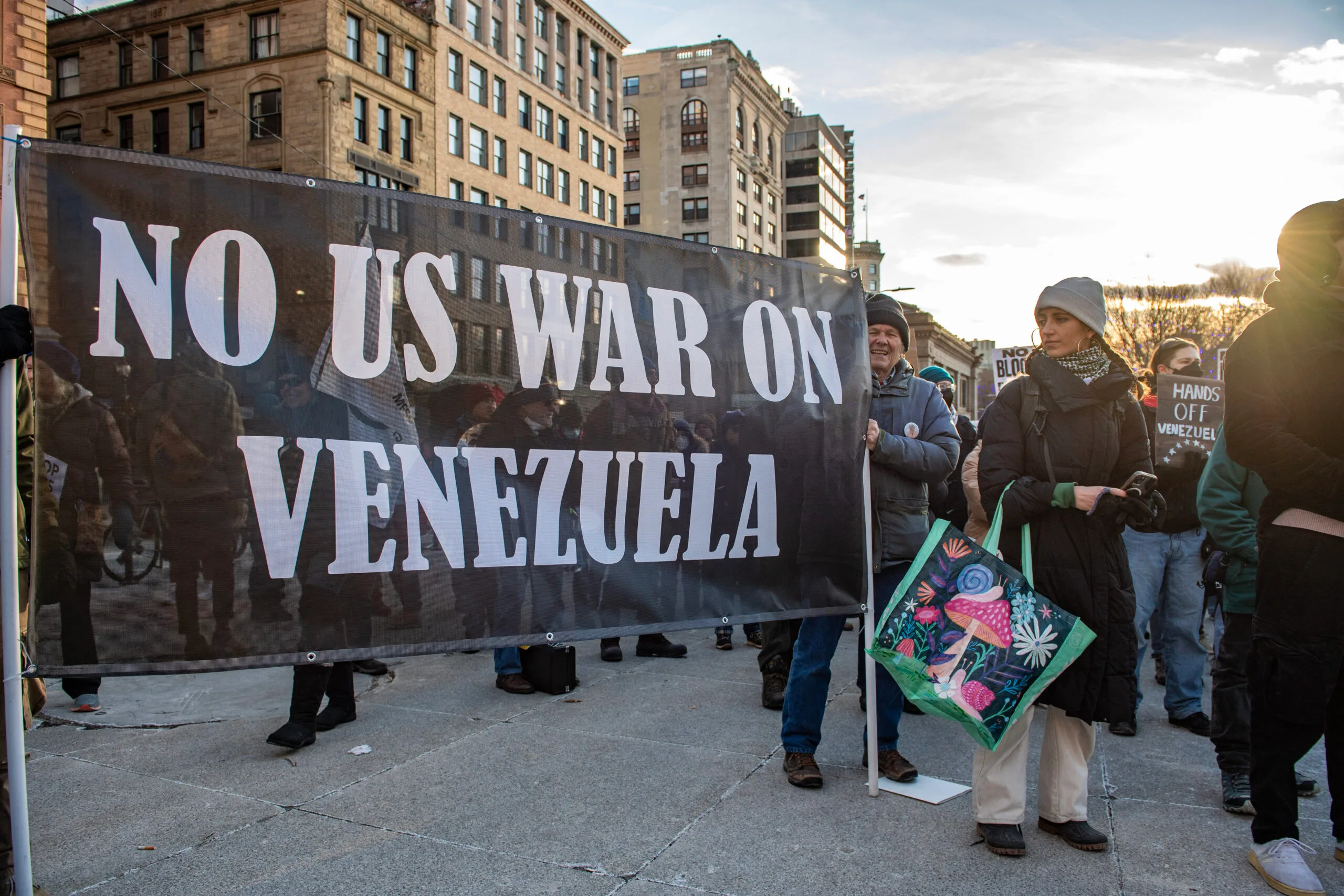
What Does This Mean For Australia?
Australia has responded cautiously to the dramatic escalation between the US and Venezuela.
In a brief statement, Albanese said his government was “monitoring developments” following the capture and transfer of Venezuela’s president and his wife to the United States.
“We urge all parties to support dialogue and diplomacy in order to secure regional stability and prevent escalation,” he said.
In an article for The Guardian, Donald Rothwell, professor of international law at the Australian National University, stated that “for Australia, given that it is deeply entwined in the US military and security framework through ANZUS and AUKUS, this has particular legal and defence implications.”
He goes on to question: “If US military action in the region was challenged, would that trigger Australia’s ANZUS treaty obligations, and how would Australia precisely come to the aid of Trump-inspired US military adventurism?”
We can only wait and see.

Related stories

Native ad body.
Native ad body.




Native ad body.